Physical and Chemical Responses in Animals
Fever feels terrible. Inflammation hurts. Pus is unpleasant. But every one of these responses is your body doing exactly what it should — a coordinated, biochemical assault on invading pathogens, running automatically the moment a barrier is breached.
Practise this lesson
Four printable worksheets that build from the foundations up to exam-style questions — start at whatever level suits you.
When you get a cut that becomes infected, the area around it turns red, swells, feels warm, and hurts. This is inflammation.
Before reading: predict what is actually happening at the cellular level to cause each of these four signs — redness, swelling, warmth, and pain. Write your prediction for each one.
Know
- Physical barriers that prevent pathogen entry in animals
- The four cardinal signs of inflammation and their causes
- The role of fever as a chemical defence
- Key chemical mediators: histamine, cytokines, complement
Understand
- Why inflammation is an adaptive response, not just a symptom
- How physical and chemical responses work together
- Why fever is beneficial within a range but dangerous if excessive
Can Do
- Link each sign of inflammation to its cellular cause
- Explain the sequence of events in the inflammatory response
- Analyse data showing physical and chemical changes in infected tissue
Core Content
The body's castle walls
Before any immune response can occur, pathogens must first get past structural features that prevent entry in the first place — the body's equivalent of castle walls.
| Barrier | Location | How It Prevents Infection |
|---|---|---|
| Skin (epidermis) | External body surface | Tough, keratinised, multilayered — physically blocks most pathogens; dead outer cells constantly shed, removing surface microbes; slightly acidic pH inhibits bacterial growth |
| Mucous membranes | Respiratory, digestive, urogenital tracts | Mucus traps pathogens and particles; cilia sweep mucus toward exits (mucociliary escalator); goblet cells continuously replenish mucus layer |
| Cilia | Respiratory tract lining | Coordinated beating moves mucus and trapped pathogens upward toward throat for swallowing or expulsion |
| Stomach acid | Stomach | HCl (pH 1.5–3.5) destroys most ingested pathogens before they reach the intestine |
| Lysozyme | Tears, saliva, nasal secretions | Enzyme that degrades peptidoglycan in bacterial cell walls — bactericidal in mucosal secretions |
| Normal microbiome | Skin, gut, vaginal tract | Commensal bacteria compete with pathogens for nutrients and attachment sites; some produce antimicrobial compounds |
| Sebaceous glands | Skin | Secrete sebum — slightly acidic oil that creates an inhospitable environment for many pathogens on skin surface |
What to write in your book
- Skin: keratinised, acidic, sheds outer cells
- Mucous membranes + cilia: trap and sweep pathogens (mucociliary escalator)
- Chemical barriers within physical layer: stomach acid, lysozyme, sebum
- Normal microbiome competes with pathogens; physical barrier is the most important defence
Which of the following is a physical (structural) barrier to infection?
Data Analysis — Temperature and Immune Function
Pattern A — Structured Data Analysis
The table below shows data from an experiment investigating the effect of temperature on neutrophil phagocytosis rate and bacterial replication rate in vitro (in cell culture).
| Temperature (°C) | Neutrophil phagocytosis rate (bacteria/neutrophil/hour) | Bacterial replication rate (doublings/hour) |
|---|---|---|
| 36.0 (sub-normal) | 4.1 | 2.8 |
| 37.0 (normal body temp) | 5.2 | 2.9 |
| 38.0 (mild fever) | 6.8 | 2.7 |
| 38.5 (moderate fever) | 7.4 | 2.4 |
| 39.5 (high fever) | 7.1 | 2.1 |
| 40.5 (very high fever) | 5.3 | 1.8 |
| 41.5 (dangerous fever) | 2.9 | 1.5 |
- Describe the trend in neutrophil phagocytosis rate as temperature increases from 37°C to 41.5°C.
- At what temperature does neutrophil phagocytosis reach its peak? What happens to phagocytosis rate above this temperature, and suggest a biological explanation.
- Describe the trend in bacterial replication rate as temperature increases. How does this support the adaptive value of fever?
- At 40.5°C, the neutrophil phagocytosis rate has declined from its peak but bacterial replication rate is also at its second lowest. Evaluate whether a fever of 40.5°C is likely to be beneficial or harmful to the host, using both columns of data.
- A doctor recommends treating any fever above 38°C with ibuprofen immediately. Evaluate this recommendation using the data provided.
Redness · swelling · heat · pain
The four cardinal signs of inflammation are not random symptoms — each has a specific cellular cause and a specific defensive purpose.
When a pathogen breaches physical barriers and enters tissue, the inflammatory response begins within seconds. Its purpose is to deliver immune cells and chemical mediators to the site of infection, contain the pathogen, and begin repair.
The four cardinal signs of inflammation — each caused by a specific cellular mechanism, each serving a defensive purpose
What to write in your book
- Redness — vasodilation (more blood flow)
- Swelling — increased capillary permeability (plasma leaks into tissue)
- Heat — increased blood flow + immune cell metabolism
- Pain — prostaglandins + bradykinin stimulate nociceptors
Redness and warmth at an infection site are both caused mainly by:
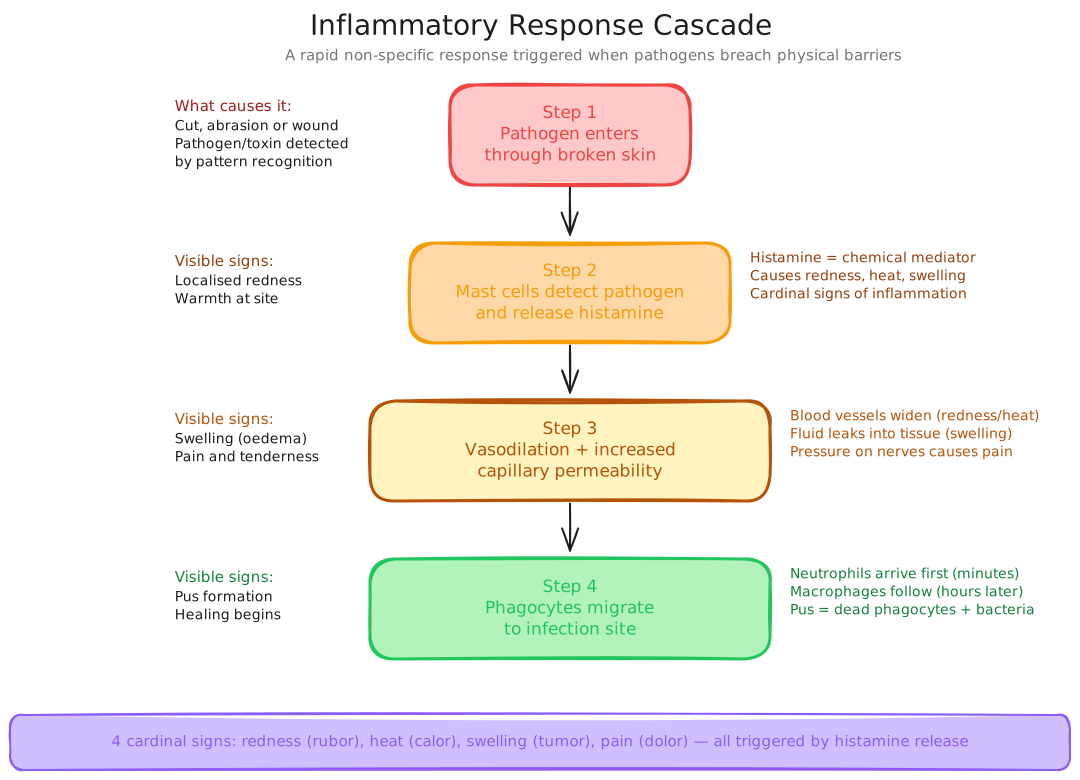
Inflammatory Response Cascade
A precise sequence triggered by chemical signals
Inflammation does not just happen — it unfolds in a precise sequence triggered by chemical signals from damaged and infected cells.
The inflammatory cascade — from pathogen entry to immune cell recruitment and pathogen destruction
What to write in your book
- Sequence: pathogen enters → mast cells release histamine → vasodilation + permeability → neutrophils migrate → pathogen destruction + repair
- Chemokines establish a gradient that attracts phagocytes
- Pus = dead neutrophils + pathogen debris — a sign the immune response engaged
Mast cells release _____, which causes vasodilation and increased capillary permeability at the infection site.
The signalling molecules that coordinate inflammation
The inflammatory response is coordinated by chemical signals — understanding what each does is essential for the HSC.
Histamine
Prostaglandins
Cytokines
Chemokines
Complement proteins
Interferons
What to write in your book
- Histamine — vasodilation + permeability (mast cells/basophils)
- Prostaglandins — pain + fever; Cytokines (IL-1, IL-6, TNF-α) — recruit cells, trigger fever
- Chemokines — attract phagocytes; Complement — opsonisation + membrane attack complex
- Interferons — antiviral signal to neighbouring cells
Which chemical mediator signals neighbouring cells to produce antiviral proteins?
A deliberate response coordinated by the hypothalamus
Fever is not just an unfortunate side effect of infection — it is a deliberate, adaptive response coordinated by the hypothalamus.
The hypothalamus raises the body temperature set point in response to chemical signals — primarily pyrogens like IL-1 and prostaglandins — released by the immune system. The body then shivers and constricts surface blood vessels to reach the new, higher set point. A moderate temperature rise speeds up immune cell enzyme reactions and slows the replication of some pathogens, while a very high or prolonged fever (above ~40°C) risks denaturing the body's own proteins and requires treatment.
What to write in your book
- Pyrogens (IL-1, prostaglandins, bacterial LPS) reach the hypothalamus
- Hypothalamus resets the temperature "thermostat" upward → shivering / vasoconstriction
- Benefit: speeds immune reactions; slows some pathogen replication
- Dangerous above ~40°C — protein denaturation risk
A moderate fever can be beneficial because it speeds up immune reactions and slows some pathogen growth.
Lysozyme in tears and saliva destroys bacterial cell walls by breaking down peptidoglycan.
The skin is an ineffective physical barrier because pathogens can easily pass through dead keratinised cells.
When you get a splinter that becomes infected, a precise sequence unfolds. Bacteria enter the wound. Mast cells in the surrounding tissue release histamine — causing the familiar redness and warmth as blood vessels dilate and more blood arrives. Capillaries become leaky, plasma floods the tissue — causing the swelling. Prostaglandins sensitise nerve endings — causing the throbbing pain that tells you not to use the injured finger. Within hours, neutrophils arrive via chemokine gradients, engulf bacteria, and die — their remains accumulating as pus. Meanwhile, cytokines from macrophages at the site travel via the bloodstream to the hypothalamus, triggering a mild fever that accelerates the whole process. If the infection spreads, complement proteins in the blood coat bacteria for easier phagocytosis. Each of these steps — once dismissed as mere "symptoms" — is a precisely coordinated defence mechanism. The redness, swelling, heat, and pain of a small infected cut represent your body running a 400-million-year-old programme that is extraordinarily effective at what it does. You will map this process in the practice questions.
Physical Barriers
- Skin — keratinised, acidic, constantly shedding.
- Mucous membranes + cilia — trap and sweep pathogens.
- Stomach acid (pH 1.5–3.5) — destroys ingested pathogens.
- Lysozyme in tears/saliva — degrades bacterial cell walls.
Four Signs of Inflammation
- Redness — vasodilation → more blood flow.
- Swelling — increased capillary permeability → plasma leaks into tissue.
- Heat — increased blood flow + immune cell metabolism.
- Pain — prostaglandins + bradykinin stimulate nociceptors.
Key Chemical Mediators
- Histamine: vasodilation + permeability (mast cells).
- Prostaglandins: pain + fever.
- Cytokines (IL-1, IL-6, TNF-α): recruit immune cells; trigger fever.
- Complement: opsonisation + membrane attack complex.
- Interferons: antiviral — signal neighbouring cells.
Fever
- Trigger: pyrogens (IL-1, prostaglandins, bacterial LPS) reach hypothalamus.
- Mechanism: hypothalamus resets thermostat upward → shivering/vasoconstriction.
- Benefit: speeds immune reactions; reduces some pathogen replication.
- Dangerous above 40°C — protein denaturation risk.
Inflammatory Response — Step by Step
A fresh set drawn from this lesson's question bank — feedback shown immediately. +5 XP per correct · +25 XP all correct
Pick your answer, then rate your confidence — that tells the system what to drill next.
UnderstandBand 3(3 marks) 1. Explain how the skin and mucous membranes act as physical barriers against pathogen entry. For each, identify one structural feature and explain how it prevents infection.
1 mark: skin feature + mechanism · 1 mark: mucous membrane feature + mechanism · 1 mark: one additional feature (lysozyme, cilia, stomach acid, microbiome)
EvaluateBand 4(3 marks) 2. A student claims: "Inflammation is a harmful overreaction by the immune system — anti-inflammatory drugs should always be taken to reduce it." Evaluate this claim, referring to the causes and purposes of the four cardinal signs of inflammation.
1 mark: identifies what causes the four signs · 1 mark: explains the defensive purpose of at least two signs · 1 mark: evaluative conclusion
AnalyseBand 5(4 marks) 3. Describe the sequence of physical and chemical changes that occur in host animal tissue in the first 12 hours following bacterial infection of a skin wound. In your answer, refer to at least four specific mediators or cell types and explain the role of each.
1 mark per correctly described mediator/cell type with its role (max 4): mast cells/histamine, prostaglandins, cytokines/chemokines, neutrophils, complement, interferons
Show all answers
Multiple choice
MC answers and full explanations are shown inline as you complete each question. Use the retry button to attempt a fresh set from the lesson bank.
Short Answer Model Answers
Q1 (3 marks): The skin acts as a physical barrier through its keratinised, multilayered epidermis — keratin makes the outer skin tough and relatively impermeable, and the constant shedding of dead outer cells removes any surface-dwelling microorganisms before they can establish infection. The skin's slightly acidic pH (around 4.5–5.5) also inhibits the growth of many pathogenic bacteria. Mucous membranes line the respiratory, digestive, and urogenital tracts. Mucus physically traps pathogens in a sticky gel layer, and the coordinated beating of cilia sweeps this mucus (with trapped pathogens) upward toward the throat in the mucociliary escalator — where it is swallowed and destroyed by stomach acid. An additional physical defence is lysozyme, present in tears, saliva, and nasal secretions — this enzyme degrades peptidoglycan in bacterial cell walls, killing bacteria on contact at mucosal surfaces.
Q2 (3 marks): The student's claim is incorrect. The four cardinal signs of inflammation each serve defined defensive purposes. Redness and heat are caused by vasodilation (triggered by histamine), increasing blood flow to deliver immune cells and chemical mediators rapidly. Swelling is caused by increased capillary permeability, allowing plasma (including antibodies and complement proteins) to flood the infection site. Pain (from prostaglandins and bradykinin) signals tissue damage and reduces use of the injured area, protecting it during repair. These responses are adaptive mechanisms essential for pathogen clearance and tissue repair. Anti-inflammatory drugs are appropriate when inflammation is excessive, prolonged, or causing more harm than benefit — but taking them reflexively suppresses responses that are actively assisting recovery and may prolong infection clearance. The claim is an oversimplification.
Q3 (4 marks): Within seconds of bacterial entry, damaged tissue cells and mast cells release histamine, causing vasodilation (increasing blood flow → redness and warmth) and increased capillary permeability (allowing plasma to leak into tissue → swelling), and delivering complement proteins to the site. Simultaneously, damaged cells release prostaglandins and bradykinin, sensitising pain receptors (nociceptors) → pain. Within the first hour, macrophages phagocytose bacteria and release cytokines (IL-1, IL-6, TNF-α) which travel to the hypothalamus triggering fever, and act as chemokines establishing a gradient that attracts neutrophils (chemotaxis). Within 2–6 hours, neutrophils migrate out of blood vessels (diapedesis) and engulf bacteria by phagocytosis, killing them with reactive oxygen species; dead neutrophils accumulate as pus. Complement proteins coat bacteria (opsonisation) and form membrane attack complexes that puncture bacterial membranes. By 12 hours, this combination of physical, cellular, and chemical responses has typically contained the infection and begun repair.
Five timed questions on physical and chemical defences in animals. Beat the boss to bank a tier — gold (perfect + fast), silver (80%+), or bronze (cleared).
⚔ Enter the arenaClimb platforms, hit checkpoints, and answer quick-recall questions on this lesson. Lighter than the boss — pure recall practice.
You were asked to predict the cellular cause of each of the four signs of inflammation — redness, swelling, warmth, and pain.
The answers: redness and warmth share the same cause — vasodilation triggered by histamine from mast cells, which widens blood vessels and increases blood flow, bringing more warm blood close to the surface. Swelling has a different cause — increased capillary permeability (also triggered by histamine and other mediators) allows plasma to leak from blood vessels into the tissue space, causing fluid accumulation. Pain is caused by prostaglandins and bradykinin directly stimulating pain receptor nerve endings (nociceptors).
If you predicted that redness and swelling had the same cause — they are both triggered by histamine, but through different mechanisms (vasodilation vs permeability). If you predicted that warmth was caused by fever — local warmth at an infection site is due to increased blood flow, not systemic fever. Fever is a separate, whole-body response coordinated by the hypothalamus.
The key insight: every sign has a specific cellular mechanism and a specific defensive purpose. They are not random discomforts — they are information and action, happening simultaneously.