How Plants Respond to Pathogens
A Banksia has no white blood cells, no antibodies, no fever response. Yet when Phytophthora cinnamomi invades its roots, it fights back — using chemistry, cell walls, and sacrifice. Plants mount defences as sophisticated as any immune system, just entirely different in design.
Practise this lesson
Four printable worksheets that build from the foundations up to exam-style questions — start at whatever level suits you.
Consider this analogy:
"A castle under siege has two lines of defence: the walls and moat that stop attackers getting in, and the soldiers inside who fight those that breach the walls."
Before reading: apply this analogy to how you think a plant might defend itself against a pathogen. What would the "walls and moat" be? What would the "soldiers inside" represent? Write your predictions before reading on.
Know
- Physical defences plants use to prevent pathogen entry
- Chemical defences plants produce in response to infection
- The hypersensitive response and systemic acquired resistance
- How Banksia responds to Phytophthora cinnamomi infection
Understand
- Why physical and chemical defences are complementary
- How the hypersensitive response limits pathogen spread at the cost of host cells
- Why some plants have greater resistance than others
Can Do
- Distinguish physical from chemical plant defences with examples
- Describe the hypersensitive response and explain its function
- Explain the Banksia–Phytophthora interaction using defence terminology
Core Content
Structural barriers + antimicrobial chemistry
Plants have no specialised immune cells — instead they rely on two integrated systems: physical barriers that prevent entry, and chemicals that limit a pathogen once it gets inside.
These systems are analogous to the castle analogy — but in plant biology, both layers are active and sophisticated.
Physical (Structural) Defences
- Cuticle: waxy, waterproof layer covering leaf and stem surfaces — prevents spore germination and entry of water-borne pathogens
- Cell wall: cellulose and lignin matrix physically blocks hyphal penetration; can be reinforced with extra callose and lignin at infection sites
- Bark: thick outer layer of dead cells in woody plants — physical barrier and desiccation zone that kills pathogens
- Stomatal closure: stomata close in response to pathogen detection signals, blocking the primary entry point for airborne pathogens
- Trichomes: leaf hairs that trap spores and deter insect vectors; some produce sticky or toxic secretions
- Tyloses: balloon-like outgrowths from xylem parenchyma cells that block xylem vessels — prevent vascular wilt pathogens from spreading through the water transport system
Chemical Defences
- Phytoalexins: antimicrobial compounds produced rapidly at infection sites — directly toxic to fungal and bacterial pathogens (e.g. resveratrol in grapes)
- Pathogenesis-related (PR) proteins: produced after pathogen detection — include chitinases (break down fungal cell walls), glucanases, and protease inhibitors
- Reactive oxygen species (ROS): hydrogen peroxide and superoxide produced at infection sites — directly toxic to pathogens and trigger cell wall reinforcement
- Salicylic acid (SA): plant hormone that signals systemic acquired resistance (SAR) — activates defences throughout the whole plant
- Tannins and phenolics: constitutive antimicrobial compounds in cell vacuoles — released when cells are damaged
- Resin and latex: sticky, antimicrobial secretions that physically trap and chemically inhibit pathogens in some species
What to write in your book
- Physical: cuticle, cell wall (callose/lignin), bark, stomatal closure, trichomes, tyloses
- Chemical: phytoalexins, PR proteins, ROS, salicylic acid, tannins/phenolics
- Constitutive = always present; induced = activated on detection
- The two layers are complementary — both are active and sophisticated
Which of these is a chemical plant defence (not a physical one)?
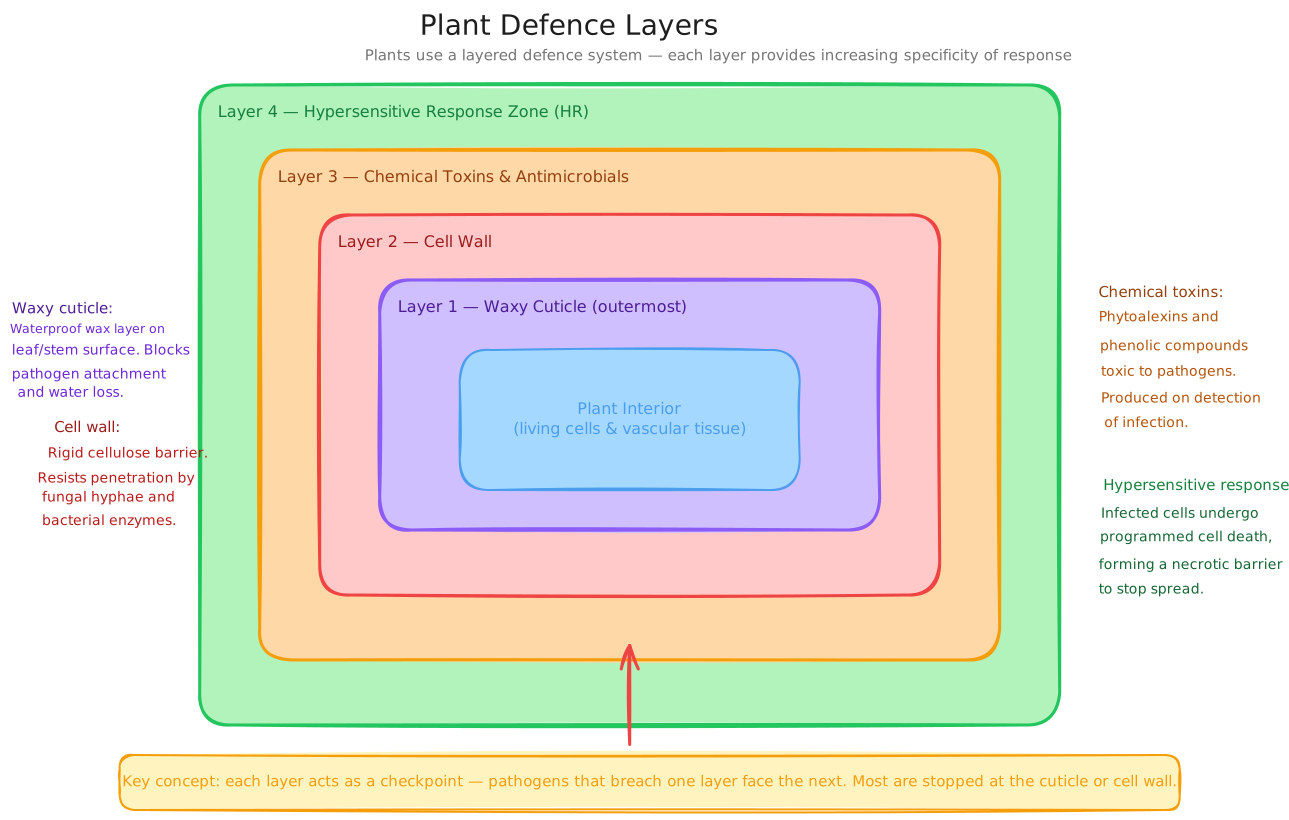
Plant Defence Layers — Cross-Section
Deliberate cell suicide to contain a pathogen
The hypersensitive response is counterintuitive — the plant deliberately kills its own cells at the infection site to stop the pathogen spreading.
When a pathogen breaches initial physical barriers and begins to infect plant cells, one of the most powerful plant defence responses is the hypersensitive response (HR).
The HR works because most plant pathogens are biotrophs (they require living host cells to survive and reproduce) or hemibiotrophs. By rapidly killing the cells around the infection point, the plant creates a zone of dead tissue that the pathogen cannot exploit.
What to write in your book
- HR: R-proteins detect PAMPs → ROS burst → programmed cell death → cell wall reinforcement
- Works because biotrophs need LIVING cells; dead zone starves them
- Visible necrotic lesion = successful containment
- Salicylic acid signal then activates whole-plant SAR
In the hypersensitive response, the plant deliberately kills its own cells around the infection site.
The hypersensitive response (HR) in plants involves rapid, localized programmed cell death to prevent pathogen spread.
Plants have no defence mechanisms against pathogens because they lack an immune system.
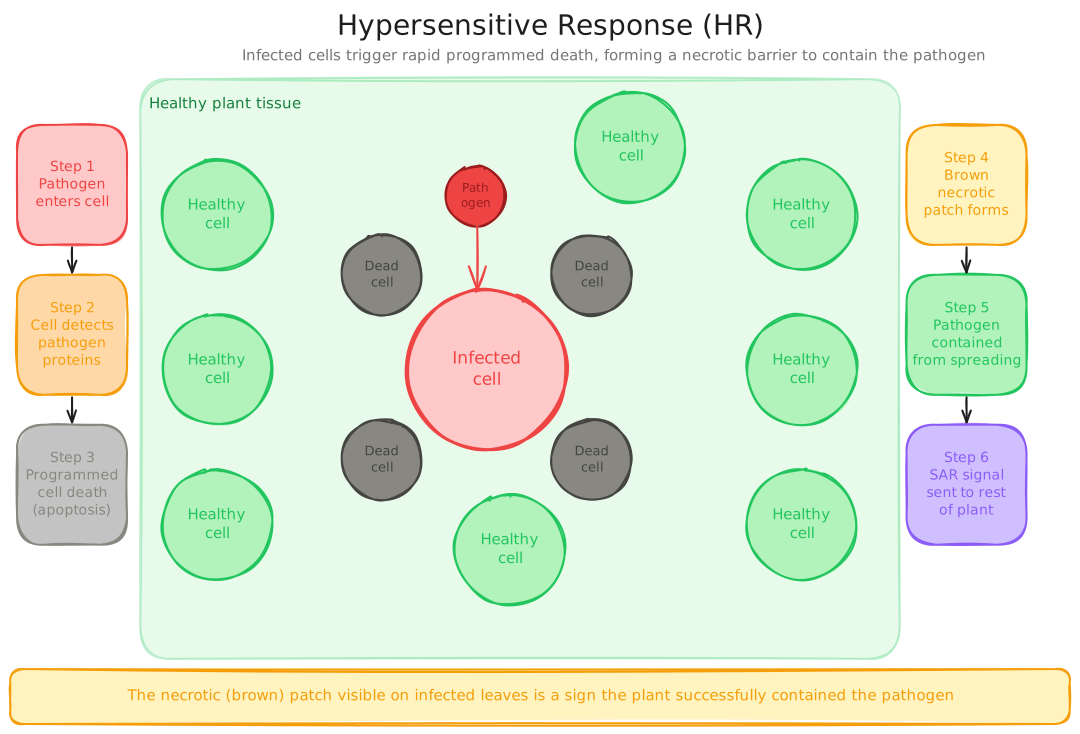
Hypersensitive Response
The plant equivalent of immunological memory — by a different mechanism
After a local infection triggers the HR, the plant sends a chemical signal — salicylic acid — to the rest of its body, priming defences everywhere.
Systemic acquired resistance (SAR) is the plant equivalent of immunological memory — though the mechanism is entirely different. After a localised infection triggers the HR, signalling molecules (primarily salicylic acid) travel through the phloem to uninfected parts of the plant.
In those uninfected tissues, SAR activates the expression of pathogenesis-related (PR) genes, producing PR proteins that prime the plant's defences against future infection. The entire plant becomes more resistant — not just the site of the original infection.
SAR can last for days to weeks after the initial infection signal. Unlike animal immunological memory, it is not pathogen-specific — it provides broad-spectrum resistance. This is both an advantage (broad protection) and a limitation (no targeted antibody-like response).
The HR is a deliberate sacrifice — infected cells die to create a zone the pathogen cannot exploit. A visible necrotic lesion means the response worked.
What to write in your book
- SAR = whole-plant defensive priming after a local infection
- Signal = salicylic acid via phloem → activates PR genes plant-wide
- Broad-spectrum (not pathogen-specific); lasts days to weeks
- Analogous to — but mechanistically different from — animal immunological memory
The hormone _____ acid travels through the phloem to trigger systemic acquired resistance.
Phytophthora dieback — root invasion and Banksia's response
Phytophthora cinnamomi is an oomycete — a water mould, not a true fungus — and it causes one of Australia's most ecologically devastating plant diseases.
Phytophthora cinnamomi causes Phytophthora dieback, infecting the roots of a vast range of native plants including Banksia, jarrah, grass trees (Xanthorrhoea), and many heathland species. It spreads primarily through water movement in soil — zoospores (swimming spores) move through water films between soil particles. Human activity (vehicles, boots, contaminated soil on equipment) dramatically accelerates spread.
How Phytophthora Attacks Banksia Roots
Zoospores are attracted by chemical signals (root exudates) from living roots. They attach to root surfaces, germinate, and penetrate root cells using enzymatic degradation of the cell wall. Hyphae then grow through root cortex tissue, destroying cells and blocking water and nutrient uptake through the xylem. Above ground, the first visible sign is yellowing and wilting of leaves — a consequence of root failure, not direct above-ground attack.
Banksia Defence Responses
Most Australian Banksia species have limited resistance to Phytophthora cinnamomi — the pathogen is introduced from Southeast Asia and Australian plants have had limited evolutionary exposure. Banksia species that do show some resistance typically have stronger hypersensitive responses and produce more effective phytoalexins. Research into naturally resistant individuals is ongoing as part of conservation management.
What to write in your book
- Phytophthora cinnamomi = oomycete (water mould), NOT a true fungus — spreads via soil-water zoospores
- Invades roots, destroys cortex, blocks xylem → above-ground yellowing/wilting
- Banksia responses: callose/phenolics, phytoalexins, HR (in resistant individuals)
- Often insufficient: limited evolutionary exposure → weak recognition/HR
Phytophthora cinnamomi is best classified as:
Phytophthora cinnamomi has been described by the IUCN as one of the world's 100 worst invasive species. In Australia, it threatens an estimated 5,000 plant species — including 40% of native plant species in south-western Western Australia, a global biodiversity hotspot. Banksia woodlands in the southwest are particularly affected: entire communities of Banksia, jarrah, grass trees, and orchids can be eliminated as the disease front moves through. The disease spreads along vehicle tracks and walking paths, meaning that human recreation in national parks is a significant transmission vector — hence the boot-wash stations and track closures at many WA parks. There is no effective broad-scale treatment. Phosphonate (phosphite) fungicide applied by stem injection or foliar spray can suppress Phytophthora and boost plant immune responses (including SAR), but it cannot eradicate the pathogen from soil. Management focuses on hygiene (preventing introduction to new areas), phosphonate treatment of high-value or critically endangered plants, and identifying naturally resistant genotypes for conservation seed banking. You will apply your knowledge of plant defences to this system in the practice questions.
Physical Plant Defences
- Cuticle — waxy layer preventing spore entry.
- Cell wall reinforcement — callose and lignin deposited at infection sites.
- Stomatal closure — blocks entry of airborne pathogens.
- Tyloses — block xylem to prevent vascular pathogen spread.
Chemical Plant Defences
- Phytoalexins — antimicrobial compounds produced at infection site.
- PR proteins — chitinases, glucanases; degrade pathogen structures.
- Reactive oxygen species (ROS) — toxic burst at infection site.
- Salicylic acid — signals systemic acquired resistance throughout plant.
Hypersensitive Response
- R-proteins detect pathogen PAMPs → triggers defence cascade.
- ROS burst → toxic to pathogen and local signal.
- Programmed cell death → necrotic zone starves biotrophs.
- Callose/lignin reinforcement → seals the necrotic zone.
Banksia and Phytophthora cinnamomi
- Pathogen: oomycete (not a true fungus); spreads via soil water zoospores.
- Mechanism: invades roots, destroys cortex, blocks xylem → above-ground wilting.
- Banksia responses: cell wall reinforcement, phytoalexins, HR (in resistant individuals).
- Management: phosphonate injection, hygiene, seed banking of resistant genotypes.
Systemic Acquired Resistance (SAR) Pathway
A fresh set drawn from this lesson's question bank — feedback shown immediately. +5 XP per correct · +25 XP all correct
Pick your answer, then rate your confidence — that tells the system what to drill next.
UnderstandBand 3(3 marks) 1. Distinguish between constitutive and induced plant defences. Give one example of each and explain how each type contributes to plant protection against pathogens.
1 mark: constitutive defence with example · 1 mark: induced defence with example · 1 mark: explanation of how the two types are complementary
UnderstandBand 4(3 marks) 2. Describe the sequence of events in the hypersensitive response (HR) in plants. In your answer, explain why programmed cell death is considered an adaptive defence rather than a sign of disease.
1 mark: HR sequence (recognition → ROS → programmed cell death → reinforcement) · 1 mark: salicylic acid signalling and SAR · 1 mark: why cell death is adaptive, not pathological
EvaluateBand 5(4 marks) 3. Investigate the response of Banksia to infection by Phytophthora cinnamomi. In your answer, describe how the pathogen causes disease, explain both the physical and chemical responses the Banksia mounts, and explain why these responses are often insufficient to prevent plant death in susceptible species.
1 mark: mechanism of infection in roots · 1 mark: physical responses · 1 mark: chemical responses including HR · 1 mark: why responses are insufficient in susceptible individuals
Show all answers
Multiple choice
MC answers and full explanations are shown inline as you complete each question. Use the retry button to attempt a fresh set from the lesson bank.
Short Answer Model Answers
Q1 (3 marks): Constitutive defences are always present in plant tissues regardless of whether infection is occurring — they do not need to be activated. An example is the cuticle: a waxy layer covering leaf and stem surfaces that physically prevents spore germination and the entry of waterborne pathogens at all times. Constitutive defences contribute to plant protection by providing an immediate, continuous barrier that pathogens must overcome before any infection can begin. Induced defences are activated only after the plant detects pathogen presence. An example is phytoalexins: antimicrobial compounds synthesised at infection sites within hours of pathogen detection. Induced defences contribute by providing a targeted, high-concentration response exactly where it is needed. Together they are complementary: constitutive defences provide the first barrier that reduces pathogen entry, while induced defences provide a second, more powerful response against any pathogens that breach the initial barrier.
Q2 (3 marks): The hypersensitive response begins when plant receptor proteins (R-proteins) detect pathogen-associated molecular patterns (PAMPs). This recognition triggers a rapid burst of reactive oxygen species (ROS) at the infection site, which is directly toxic to the pathogen and acts as a local alarm signal. Infected cells and immediately surrounding cells then undergo rapid programmed cell death, forming a visible necrotic lesion. Surviving adjacent cells deposit callose and lignin, sealing off the dead zone, while salicylic acid travels through the phloem to activate systemic acquired resistance throughout the plant. Programmed cell death is adaptive rather than pathological because most biotrophic pathogens require living host cells to survive and reproduce — by killing infected cells, the plant creates a zone of dead, nutrient-poor tissue the pathogen cannot exploit. The necrotic lesion is evidence of containment; an absence of necrosis in susceptible plants means the pathogen is spreading freely.
Q3 (4 marks): Phytophthora cinnamomi causes disease in Banksia through root infection. Zoospores — motile swimming spores — are attracted by root exudates and move through water films between soil particles. They attach to root surfaces, germinate, and penetrate root cells by enzymatically degrading the cellulose cell wall. Hyphae grow through the root cortex, destroying cells and blocking xylem vessels — preventing water and nutrient uptake; the first visible symptom above ground is yellowing and wilting. Physical defence responses include deposition of callose and phenolic compounds in root cell walls to slow hyphal penetration, and in some species, growth of cluster roots away from infected zones. Chemical defence responses include production of phytoalexins (antimicrobial phenolics) and, in resistant individuals, a hypersensitive response that kills infected root cells to create a necrotic containment zone. These responses are often insufficient in susceptible Banksia because (1) most Australian Banksia have had limited evolutionary exposure to Phytophthora, so their R-protein recognition is inefficient and the HR is delayed or absent; (2) phytoalexin concentrations may be too low to inhibit the pathogen; and (3) Phytophthora spreads rapidly through soil water, establishing infections at multiple points simultaneously and overwhelming the plant's localised root defences.
Five timed questions on plant defences against pathogens. Beat the boss to bank a tier — gold (perfect + fast), silver (80%+), or bronze (cleared).
⚔ Enter the arenaDefend your ship by blasting the correct answers for How Plants Respond to Pathogens. Scores count toward the Asteroid Blaster leaderboard.
☄️ Play Asteroid Blaster →You were asked to apply the castle analogy — walls and moat versus soldiers inside — to plant defences against pathogens.
The mapping works well. The "walls and moat" are the plant's physical (structural) defences: the cuticle (outer wall), cell wall (inner fortification), stomatal closure (closing the gates), and bark (the moat — a zone the pathogen must cross). These are largely constitutive — always in place, whether an attack is occurring or not.
The "soldiers inside" are the chemical and cellular responses activated when a pathogen breaches the physical barriers: phytoalexins and PR proteins (chemical weapons), the hypersensitive response (soldiers sacrificing themselves to create a firebreak), and systemic acquired resistance (dispatching messengers to alert the rest of the castle).
Where the analogy breaks down: unlike soldiers, the HR doesn't fight the pathogen directly — it removes the resource the pathogen needs (living cells). It's less "soldiers fighting" and more "burning your own stores to deny them to the enemy." Also, SAR is more like a general alertness upgrade across all soldiers than a specific counter to the known attacker.
If you predicted something like "thick walls prevent entry, internal chemicals fight what gets through" — you had the essential structure exactly right.