Organ Systems and Why Components Matter
In 2020, St Vincent's Hospital Sydney reported that removing a single damaged valve from a patient's heart sent ripple effects through 3 other organ systems within hours.
Printable Worksheets
Print or save as PDF, or build a custom worksheet from any module's questions.
Q1 · Q1: Why is the circulatory system not just the heart by itself?
Q2 · Q2: Imagine your school as a "system". What would happen if only the principal worked and no teachers, cleaners or canteen staff showed up?
● Know
- an organ system is a group of organs working together
- systems have components with different roles
- animal examples of organ systems can be compared at this level
● Understand
- a system only works properly when its components interact
- organs in one system do not all do the same job
- precise component -> role -> function language makes explanations stronger
● Can do
- identify organs that belong to a system
- explain how components contribute to a system function
- compare common animal organ-system examples accurately
If an organ works alone, it is not yet a system. A system exists because several organs contribute to one broader function.
In earlier lessons, you moved from cells to tissues to organs. The next level is the organ system. An organ system is not a single organ, and it is not a random collection of body parts. It is a set of organs organised around a major job, such as transport, gas exchange or digestion.
Use the circulatory system example to write one sentence for each component: heart, blood vessels and blood. Explain the role of each part in the system.
- Heart
- Blood vessels
- Blood
- Pumps blood around the body
- Transports substances
- Carry blood through the body
Build the organ system in the interactive. What is the correct order of organs from input to output?
Role: pumps blood
Role: carry blood through the body
Role: transports substances
The key this level move here is precision. You should not say only "the circulatory system moves things". A stronger answer explains which components are involved and what each contributes to the overall function.
The heart blood, blood vessels carry blood, and blood substances.
A student wrote: "The circulatory system is important." Explain why this answer is weak and rewrite it so it names components, roles and the overall function.
Claim-Evidence-Reasoning Frame
Claim: State whether the student's answer is strong or weak.
Evidence: Use what you know about components and roles from the lesson.
Reasoning: Explain why naming components and roles makes the explanation stronger.
Circulatory system
- major job: transport substances
- example components: heart, blood vessels, blood
Respiratory system
- major job: gas exchange
- example components: lungs and air passages
Digestive system
- major job: break down food and absorb useful substances
- example components: stomach and intestines
You do not need deep detail here. The main goal is to understand that different systems exist because living things need different major functions carried out, and those functions require several interacting components.
Wrong: An organ system is just one big organ doing everything.
Right: An organ system is a group of organs with different roles that work together. The heart alone is not the circulatory system; it needs blood vessels and blood too.
Wrong: All components in a system do the same job.
Right: Different components usually have different roles. The heart pumps, vessels carry, and blood transports. Each role supports the overall system function.

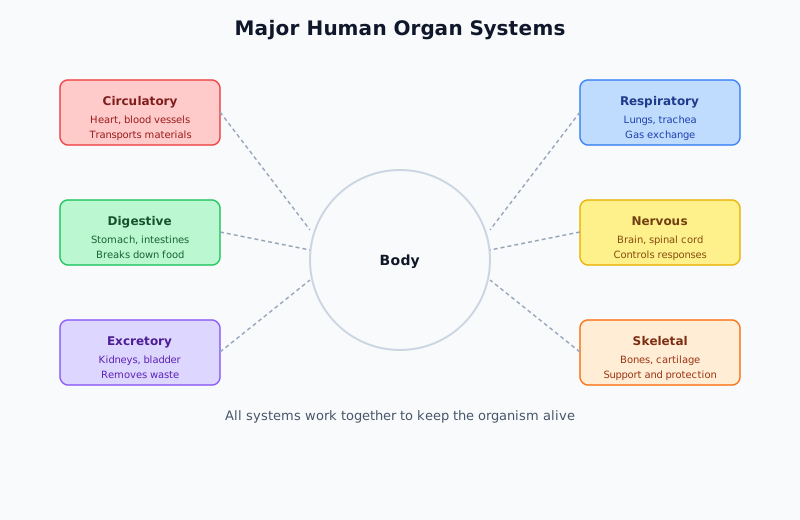
Diagram 2: Comparing Three Organ Systems
Side-by-side comparison of circulatory, respiratory and digestive systems showing components, roles and overall functions in a table format with icons.
At the start of this lesson, you were asked to think about removing one player from a footy team and how the whole game strategy falls apart, the hook used that idea to show how organ systems only work when all their components show up and do their job.
Now that you've worked through the lesson, can you explain why the circulatory system is not just the heart by itself? Name the other components that must work together, and explain what breaks down if one is missing.
Q1. Explain why an organ system is more than just a collection of organs.
1 mark for stating organs work together, 1 mark for mentioning interaction, 1 mark for linking to a shared function.Q2. Use the circulatory system to show how different components contribute different roles to one overall function.
1 mark for naming the heart and its role, 1 mark for naming blood vessels and their role, 1 mark for naming blood and its role, 1 mark for linking all three to the overall system function.Q3. Why is it weak to describe the circulatory system only as "important" without naming any components or functions?
1 mark for identifying the vagueness, 1 mark for explaining why components matter, 1 mark for explaining why roles matter, 1 mark for suggesting what a stronger answer would include.Model answers (click to reveal)
Model Answers
+Multiple Choice
1: A. An organ system is a group of organs working together to carry out a major function.
2: C. Several components work together in the circulatory system.
3: B. The digestive system breaks down food and absorbs useful substances.
4: D. This language shows how parts contribute to system function.
5: A. Different systems exist because different major functions are needed.
Short Answer 1 (3 marks)
An organ system is more than just a collection because the organs are organised around one larger function and interact with one another. The system only works properly when its components contribute their roles together.
1 mark for stating organs work together. 1 mark for mentioning interaction. 1 mark for linking to a shared function.
Short Answer 2 (4 marks)
The heart pumps blood. Blood vessels carry blood through the body. Blood transports substances. Together they help the circulatory system move substances around the body.
1 mark for naming the heart and its role. 1 mark for naming blood vessels and their role. 1 mark for naming blood and its role. 1 mark for linking all three to the overall system function.
Short Answer 3 (4 marks)
It is weak because "important" is too vague and does not explain what the system is made of or what it does. A stronger explanation would name components, describe their roles, and link them to the overall function.
1 mark for identifying the vagueness. 1 mark for explaining why components matter. 1 mark for explaining why roles matter. 1 mark for suggesting what a stronger answer would include.
Revisit Your Thinking
Return to the opening question. Can you now explain clearly why the circulatory system is not just the heart by itself?
Model answers (click to reveal)
Model Answers
+Multiple Choice
1: A. An organ system is a group of organs working together to carry out a major function.
2: C. Several components work together in the circulatory system.
3: B. The digestive system breaks down food and absorbs useful substances.
4: D. This language shows how parts contribute to system function.
5: A. Different systems exist because different major functions are needed.
Short Answer 1 (3 marks)
An organ system is more than just a collection because the organs are organised around one larger function and interact with one another. The system only works properly when its components contribute their roles together.
1 mark for stating organs work together. 1 mark for mentioning interaction. 1 mark for linking to a shared function.
Short Answer 2 (4 marks)
The heart pumps blood. Blood vessels carry blood through the body. Blood transports substances. Together they help the circulatory system move substances around the body.
1 mark for naming the heart and its role. 1 mark for naming blood vessels and their role. 1 mark for naming blood and its role. 1 mark for linking all three to the overall system function.
Short Answer 3 (4 marks)
It is weak because "important" is too vague and does not explain what the system is made of or what it does. A stronger explanation would name components, describe their roles, and link them to the overall function.
1 mark for identifying the vagueness. 1 mark for explaining why components matter. 1 mark for explaining why roles matter. 1 mark for suggesting what a stronger answer would include.
● Definition
An organ system is a group of organs working together to carry out a major function.
● Components
Different components inside a system usually contribute different roles.
● Precision
Strong explanations name components, describe roles and link them to overall function.
● Bridge Forward
Next lesson shifts to plant systems and shows that plants are organised living systems too.