Disease in Agriculture — Plants
Myrtle rust arrived in Australia in 2010 and began killing species that had evolved for 65 million years with no exposure to it. Plant disease does not just threaten farms — it can permanently reshape entire ecosystems.
Practise this lesson
Four printable worksheets that build from the foundations up to exam-style questions — start at whatever level suits you.
A single fungal pathogen introduced to Australia in 2010 has already infected over 350 plant species — many of them found nowhere else on Earth.
Before reading: predict two ways a fungal plant pathogen could spread so rapidly across a continent, and one reason why Australian native plants might be particularly vulnerable compared to plants in regions where the fungus naturally occurs.
Know
- The main types of plant pathogens: fungal, bacterial, viral, nematode
- Named examples of each causing agricultural disease
- The economic and ecological effects of plant disease
- How plant diseases spread within and between crops
Understand
- Why introduced pathogens can be especially devastating
- How pathogen type influences disease management strategies
- The relationship between plant disease and food security
Can Do
- Classify a plant pathogen and describe its mechanism of damage
- Assess the economic effects of a named plant disease
- Explain why biosecurity measures are critical for plant disease control
Core Content
10–16% of global crop losses, plus ecological devastation
The distinction between an agricultural plant disease and an ecological one is often just geography — the same pathogen can collapse a crop or reshape an ecosystem.
Plant diseases caused by pathogens are responsible for approximately 10–16% of global crop losses each year — representing hundreds of billions of dollars in lost production and a direct threat to food security for billions of people. In Australia, where agriculture contributes over $60 billion annually to the economy, plant disease is one of the most significant and ongoing threats to both production and export markets.
Beyond agriculture, plant diseases can devastate native ecosystems. The loss of a dominant tree species — such as what myrtle rust is doing to Myrtaceae family plants across Australia — can trigger cascading ecological consequences: loss of habitat for dependent fauna, altered soil chemistry, changed water cycles, and reduced biodiversity.
What to write in your book
- Plant disease = ~10–16% of global crop losses each year
- Australian agriculture worth >$60 billion/year — disease threatens production and exports
- Plant disease also damages ecosystems (habitat, soil, water, biodiversity)
- Assess both cause (pathogen) and effects (economic + ecological)
Why does plant disease matter beyond simply reducing food yield?
Plant Disease Classification Diagram
Pattern A — Draw and Annotate
In your book, create a classification diagram for plant pathogens covered in this lesson. Your diagram must:
- Show four branches from a central "Plant Pathogens" node: fungal, bacterial, viral, and nematode.
- Place at least two named disease examples on each branch, with the crop or plant affected.
- For each branch, annotate the primary spread route (e.g. airborne spores, insect vector, soil).
- For three diseases of your choice, add a second annotation describing the key economic effect on agricultural production.
- Circle any pathogens where no chemical treatment is effective once infection is established, and note why.
Fungal · bacterial · viral · nematode
Plant pathogens span all major categories — each type causes characteristic symptoms and demands a different management approach.
Fungal Pathogens
Mechanism: Hyphae penetrate plant tissue; produce enzymes that break down cell walls; absorb nutrients. Spread via airborne spores, water splash, contaminated soil and equipment.
Wheat stem rust (Puccinia graminis): destroys stem vascular tissue; reduces grain fill; can eliminate entire crops. Estimated to destroy 5–10% of global wheat annually.
Myrtle rust (Austropuccinia psidii): infects new growth of Myrtaceae; causes leaf distortion, necrosis, and death of young tissue. No known resistance in many Australian species.
Downy mildew (various oomycetes): causes yellowing, wilting, and rotting in vegetables; major threat to grapevines.
Bacterial Pathogens
Mechanism: Enter through wounds, stomata, or insect feeding sites; produce toxins and enzymes; block vascular tissue or cause cell death. Spread via water, insects, contaminated tools.
Fire blight (Erwinia amylovora): causes wilting and blackening of blossoms and shoots in apple and pear trees; spreads rapidly in wet conditions; can kill entire orchards.
Crown gall (Agrobacterium tumefaciens): causes tumour-like growths on roots and stems; disrupts nutrient uptake; infects grapevines, stone fruits, roses.
Bacterial wilt (Ralstonia solanacearum): blocks xylem in tomatoes, potatoes, and bananas; causes rapid wilting and death.
Viral Pathogens
Mechanism: Replicate inside plant cells; disrupt normal cell function and gene expression; cannot be cured once infection is established. Spread primarily by insect vectors (aphids, whitefly, thrips) or contaminated tools/hands.
Tobacco mosaic virus (TMV): causes mosaic mottling, leaf distortion, reduced photosynthesis in tobacco, tomatoes, capsicum. Extremely stable — survives for years in dried plant material.
Barley yellow dwarf virus: transmitted by aphids; causes yellowing and stunted growth in cereals; significant yield losses in wheat and barley.
Banana bunchy top virus: transmitted by banana aphid; causes stunted leaves, striped foliage, and death; threatens banana production in Queensland.
| Pathogen Type | Named Disease | Crop/Plant Affected | Key Effect on Production | Primary Spread Route |
|---|---|---|---|---|
| Fungus | Wheat stem rust (Puccinia graminis) | Wheat, barley | Up to 100% yield loss in severe outbreaks; grain quality reduced | Airborne spores — can travel thousands of km |
| Fungus | Myrtle rust (Austropuccinia psidii) | Myrtaceae (350+ species) | Death of new growth; threatens tea tree, paperbark, lilly pilly industries | Wind-dispersed spores; movement of infected plant material |
| Bacterium | Fire blight (Erwinia amylovora) | Apples, pears | Shoot and blossom death; entire orchard loss possible; major export risk | Insects, rain splash, contaminated pruning tools |
| Bacterium | Crown gall (Agrobacterium tumefaciens) | Grapevines, stone fruits | Reduced vigour; premature death; replanting costs | Soil, contaminated equipment, root wounds |
| Virus | Banana bunchy top virus | Bananas | Plant death; no fruit produced; Queensland industry threatened | Banana aphid vector; infected planting material |
| Virus | Barley yellow dwarf virus | Wheat, barley, oats | Yield losses of 10–70% depending on infection timing | Aphid vectors (multiple species) |
| Nematode | Root-knot nematode (Meloidogyne spp.) | Vegetables, cotton, grains | Root galling, nutrient uptake failure, stunted growth; estimated $80 billion global annual loss | Contaminated soil, water, infected plant material |
What to write in your book
- Fungal: hyphae + enzymes; airborne spores (e.g. wheat stem rust, myrtle rust)
- Bacterial: enter via wounds/stomata; water, insects, tools (e.g. fire blight, crown gall)
- Viral: replicate in cells; insect vectors; no cure once infected (e.g. TMV, banana bunchy top)
- Nematode: soil roundworms; root galling (e.g. root-knot nematode)
A plant viral infection can be cured with fungicide once the plant is already infected.
Fungal diseases in plants can spread rapidly through spores carried by wind, water, or contaminated equipment.
Plant diseases only affect crop plants and do not threaten native ecosystems or biodiversity.
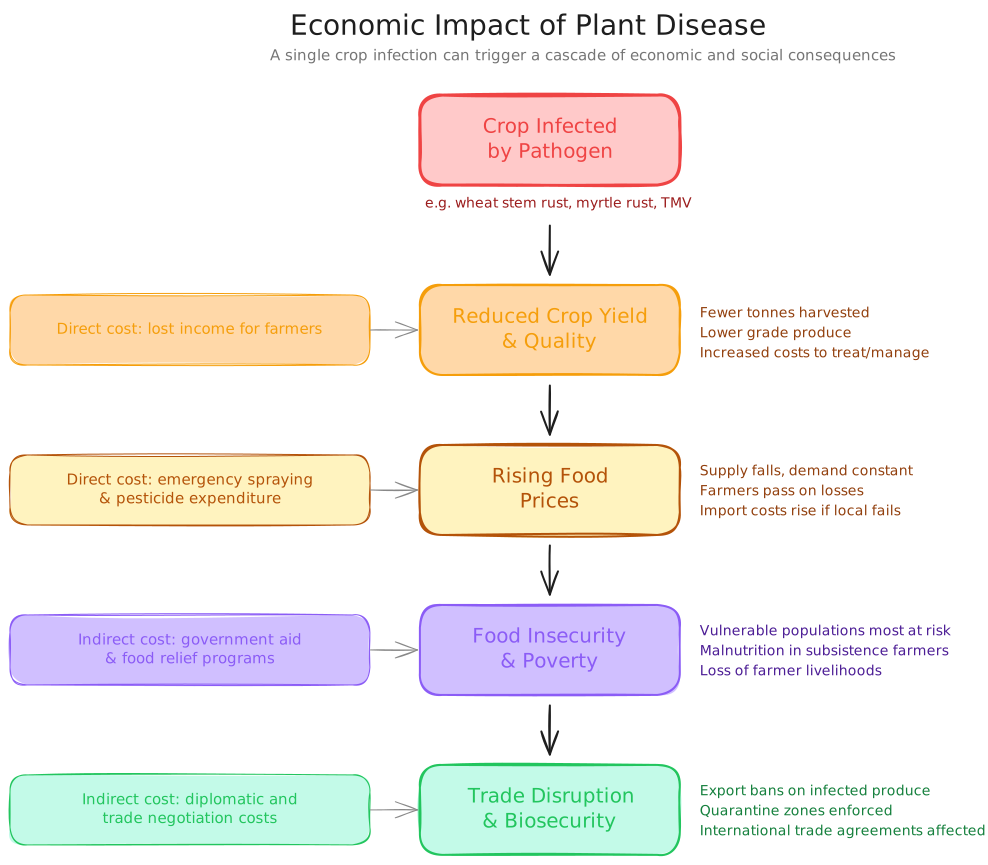
Economic Impact Pathway of Plant Disease
Direct production losses and broader consequences
The effects of plant disease extend far beyond the visible symptoms — assessing them means weighing direct production losses against broader economic and ecological consequences.
What to write in your book
- Economic effects: reduced yield, reduced quality, control costs, lost export markets
- Ecological effects: loss of dominant species, soil persistence, habitat change
- Many of Australia's worst plant diseases are introduced
- Biosecurity (prevention) is far cheaper than management after establishment
Preventing a pathogen's entry through _____ is far cheaper than eradicating it after establishment.
Myrtle rust completes its cycle in as little as 7–10 days under warm, humid conditions — explaining its rapid spread across eastern Australia
Myrtle rust (Austropuccinia psidii) was first detected in Australia at a plant nursery on the New South Wales Central Coast in April 2010. It had almost certainly arrived on contaminated plant material from South America, where it co-evolved with Myrtaceae hosts and where many species have developed some resistance. In Australia, it found something unprecedented: a continent whose entire Myrtaceae flora — comprising around 2,500 species including eucalypts, paperbarks, tea trees, bottlebrush, and lilly pilly — had never been exposed to this pathogen in their evolutionary history. Within months it had spread to Queensland. By 2023, it had been detected across all mainland states east of the Nullarbor. The economic impacts include direct losses to the nursery industry (valued at over $900 million annually), losses to the bush food industry (which uses native Myrtaceae fruits), and ongoing costs of research and management. The ecological stakes are higher still: two species — the scrub turpentine (Rhodamnia rubescens) and the penda (Xanthostemon species) — are listed as critically endangered as a direct result of myrtle rust. No cure exists. Management focuses on identifying naturally resistant individuals and using selective fungicides to protect high-value specimens. You will assess these effects in the practice questions.
Plant Pathogen Types
- Fungal: spreads via airborne spores; treated with fungicides. E.g. wheat stem rust, myrtle rust.
- Bacterial: spreads via water, insects, tools; sometimes treated with bactericides. E.g. fire blight, crown gall.
- Viral: spread by insect vectors or contaminated tools; no cure once infected. E.g. TMV, banana bunchy top virus.
- Nematode (macroorganism): soil-dwelling; causes root galling. E.g. root-knot nematode.
Economic Effects of Plant Disease
- Reduced yield — fewer harvestable units per hectare.
- Reduced quality — lower market grade or unsaleable produce.
- Increased costs — fungicides, resistant varieties, replanting.
- Loss of export markets — importing countries can ban produce.
Myrtle Rust Key Facts
- Pathogen: Austropuccinia psidii (fungus).
- Arrived Australia 2010; now in all eastern states.
- Infects 350+ Myrtaceae species — eucalypts, paperbarks, tea trees.
- No evolutionary resistance in Australian natives; no cure.
Why Biosecurity Matters
- Many of Australia's worst plant diseases are introduced.
- Prevention (border control) is far cheaper than management.
- Introduced pathogens are more dangerous due to absence of co-evolutionary history in host plants.
- Australia's biosecurity laws enforced by DAFF.
Key Plant Diseases in Agriculture
A fresh set drawn from this lesson's question bank — feedback shown immediately. +5 XP per correct · +25 XP all correct
Pick your answer, then rate your confidence — that tells the system what to drill next.
ApplyBand 3(3 marks) 1. Compare the spread and management of a named fungal plant disease with a named viral plant disease. In your answer, describe how each spreads and explain why their management strategies differ.
1 mark: fungal spread and management · 1 mark: viral spread and management · 1 mark: explanation of why strategies differ based on pathogen biology
UnderstandBand 4(3 marks) 2. Explain how root-knot nematodes (Meloidogyne spp.) cause disease in plants and assess two economic effects of nematode infection on agricultural production.
1 mark: mechanism of nematode damage · 1 mark: first economic effect with explanation · 1 mark: second economic effect with explanation
EvaluateBand 5(4 marks) 3. Myrtle rust (Austropuccinia psidii) was introduced to Australia in 2010 and has since spread to infect over 350 Myrtaceae species. Assess the causes and effects of myrtle rust on Australian production, referring to both agricultural and ecological consequences.
1 mark: cause — fungal pathogen, mechanism of infection · 1 mark: agricultural production effects with examples · 1 mark: ecological effects beyond agriculture · 1 mark: evaluative statement linking pathogen characteristics to severity
Show all answers
Multiple choice
MC answers and full explanations are shown inline as you complete each question. Use the retry button to attempt a fresh set from the lesson bank.
Short Answer Model Answers
Q1 (3 marks): Wheat stem rust (Puccinia graminis) spreads via airborne urediniospores that can travel thousands of kilometres on wind currents, infecting new wheat plants when spores land on susceptible tissue in appropriate humidity conditions. Management involves fungicide applications during susceptible growth stages, planting rust-resistant wheat varieties, and monitoring for new rust strains that may overcome existing resistance. Banana bunchy top virus spreads via the banana aphid (Pentalonia nigronervosa), which acquires the virus when feeding on infected plants and transmits it to healthy plants. Management focuses on controlling aphid populations with insecticides, immediate removal and destruction of infected plants, using certified virus-free planting material, and establishing quarantine zones. The management strategies differ fundamentally because fungal diseases can be treated after infection with fungicides that target fungal cell biology, whereas viral infections cannot be treated once established because viruses replicate inside plant cells using the plant's own machinery — viral management is therefore entirely preventive.
Q2 (3 marks): Root-knot nematodes (Meloidogyne spp.) are parasitic roundworms that penetrate plant roots as second-stage juveniles. They migrate to vascular tissue near the root tip and inject secretions that cause plant cells to enlarge abnormally, forming characteristic swellings called galls or knots. These galls disrupt the plant's vascular system — blocking the movement of water and nutrients from roots to shoots — resulting in wilting, yellowing, stunted growth, and reduced fruit or seed production. Economic effect 1: Reduced crop yield — infected plants cannot absorb adequate water and nutrients, directly reducing the quantity and size of harvestable produce, lowering profitability per hectare. Economic effect 2: Long-term soil contamination — nematode eggs can remain viable in soil for years, meaning infected paddocks cannot be replanted with susceptible crops without significant risk, forcing growers to undertake expensive soil fumigation, fallow periods, or rotation with non-host crops.
Q3 (4 marks): Myrtle rust is caused by the fungus Austropuccinia psidii. It infects plants by landing wind-dispersed urediniospores on young, actively growing tissue of Myrtaceae plants; the spores germinate, penetrating the leaf surface; hyphae grow through the tissue causing cell death; orange-yellow pustules develop and produce millions of new spores, perpetuating the cycle. Agricultural effects include direct losses to the nursery industry — valued at approximately $900 million annually, with many lines consisting of Myrtaceae species such as lilly pilly and tea tree — and losses to the bush food industry which uses native Myrtaceae fruits. Ecological effects extend beyond agriculture: myrtle rust threatens dominant native Myrtaceae such as paperbarks and bottlebrush, which provide critical habitat for birds and other fauna, and two species have been listed as critically endangered as a direct result. The severity of impact is explained by the combination of two factors: the pathogen's highly efficient wind-dispersal mechanism (enabling rapid continental spread) and the complete absence of co-evolved resistance in Australian Myrtaceae hosts, meaning the pathogen encounters no natural barriers to infection across its potential host range.
Five timed questions on plant disease in agriculture. Beat the boss to bank a tier — gold (perfect + fast), silver (80%+), or bronze (cleared).
⚔ Enter the arenaScale the platforms using your knowledge of disease in agricultural plants. Pool: lessons 1–6.
You were asked to predict how a fungal pathogen could spread rapidly across a continent, and why Australian native plants might be particularly vulnerable.
For spread: the two main mechanisms for myrtle rust are wind-dispersed spores (which can travel hundreds of kilometres) and human movement of infected plant material (nursery stock, cut branches, soil on shoes or equipment). Both mechanisms were likely in your prediction — if you identified either or both, you were correct.
For vulnerability: the key reason is evolutionary — Australian Myrtaceae evolved in complete isolation from this pathogen for tens of millions of years. There was no selection pressure for resistance, so no resistance traits developed. This is fundamentally different from saying Australian plants are "weaker" — they are simply naive to a pathogen they have never encountered. South American Myrtaceae have had millennia of co-evolution with this rust, and many have developed at least partial resistance. The same logic explains why introduced animal diseases (like rabbit haemorrhagic disease) can be devastatingly effective: the host population has no evolutionary history with the pathogen.