Vaccination and Immunity
In 1796, English physician Edward Jenner gave 8-year-old James Phipps the world's first vaccination, a cowpox inoculation that made Phipps immune to smallpox, launching a practice that has since saved an estimated 154 million lives.
Printable Worksheets
Print or save as PDF, or build a custom worksheet from any module's questions.
Q1 · Before you get sick, your body already has ways to defend itself. What do you know about how your immune system remembers diseases it has fought before?
Q2 · A school introduces a vaccination program for a contagious disease. Predict how this might protect students who are not vaccinated as well as those who are.
● Know
- How vaccines stimulate the immune system to produce memory cells
- The difference between active and passive immunity
- What herd immunity is and how it protects communities
● Understand
- Why vaccines do not cause the disease they prevent
- How vaccination schedules are designed
- Why some people cannot be vaccinated and rely on herd immunity
● Can do
- Explain how a vaccine works using the concepts of antigens and memory cells
- Distinguish between active and passive immunity
- Calculate herd immunity thresholds
In 1796, 8-year-old James Phipps received a cowpox inoculation from English physician Edward Jenner, and six weeks later, Jenner deliberately exposed the boy to smallpox. Phipps never got sick. That experiment marked the birth of vaccination: a tiny amount of foreign material had taught the immune system to fight a disease it had never fully encountered. Vaccination has since saved more lives than any other medical intervention except clean water.
The answer lies in adaptive immune memory. A vaccine presents your immune system with harmless versions of a pathogen - or just pieces of it - that are enough to trigger an immune response but not enough to cause disease. Your B cells produce antibodies, your T cells activate, and crucially, memory cells form. These memory cells persist for years or decades. When the real pathogen appears, they mount a rapid secondary response that clears the infection before it can make you seriously ill.
Different vaccines use different strategies. Live attenuated vaccines use weakened viruses that replicate poorly. Inactivated vaccines use killed viruses or bacteria. Subunit vaccines use just a protein from the pathogen. mRNA vaccines give your cells instructions to make the protein themselves. Toxoid vaccines use inactivated toxins. All of these approaches achieve the same goal: training the adaptive immune system without causing disease.
The HPV vaccine contains virus-like particles - empty protein shells that look like human papillomavirus to the immune system but contain no genetic material. Your B cells produce antibodies against these shells, and memory cells form. If real HPV enters your body years later, these antibodies bind to the virus and prevent it from infecting cervical cells, dramatically reducing the risk of cervical cancer.
Australian immunisation success: Australia National Immunisation Program provides free vaccines for 16 diseases, achieving coverage rates above 95% for most childhood vaccines. The program eliminated endemic measles, dramatically reduced meningococcal disease, and is on track to eliminate cervical cancer through HPV vaccination. NCIRS at Westmead Hospital monitors safety and effectiveness.
Vaccines give you the disease. This is false. No modern vaccine contains pathogens capable of causing disease in healthy people. Live attenuated vaccines use weakened viruses that can replicate only slightly - not enough to cause illness in immunocompetent individuals. Inactivated, subunit, and mRNA vaccines cannot replicate at all. Mild fever or soreness after vaccination is a sign that your immune system is responding, not that you have the disease.
A vaccine contains weakened or killed pathogens (or just their proteins). Your immune system responds and creates memory cells. But the vaccine itself does not make you sick. How is this possible?
How close was your prediction?
Nice calibration, your intuition is good for this kind of problem.
Good, being surprised is the point. This answer is worth remembering.
Immunity comes in two flavours: active and passive. Understanding the difference is essential for understanding vaccines, breast feeding, and antibody therapies.
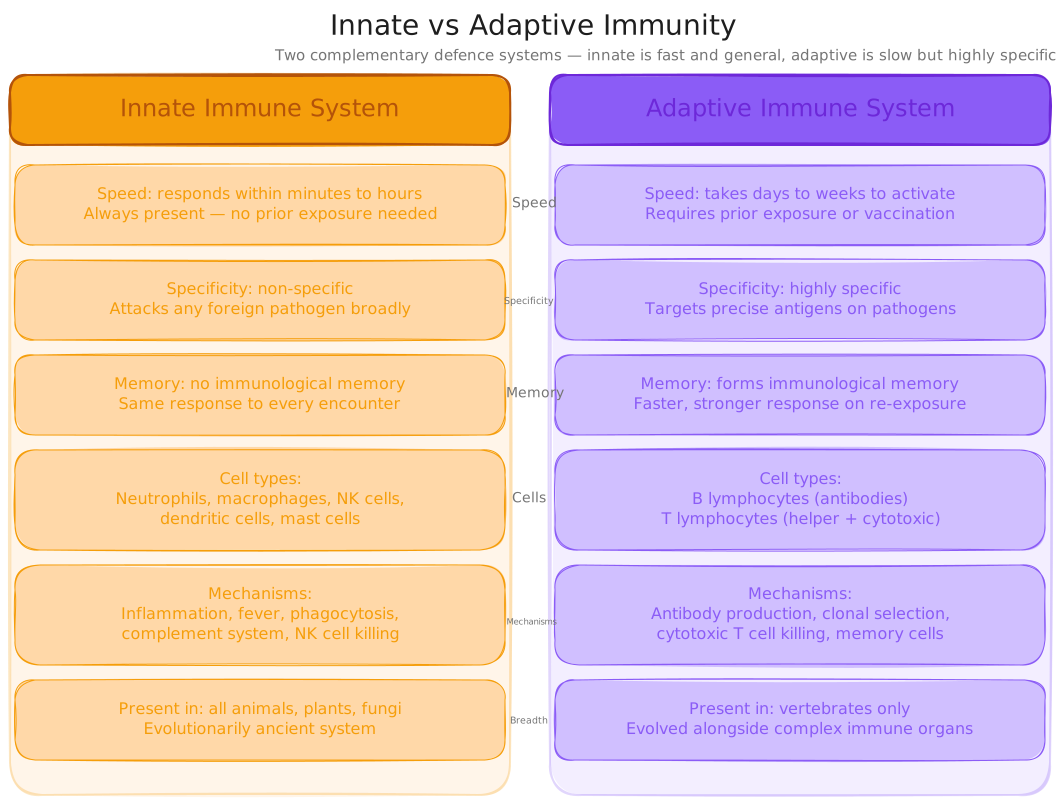
Active immunity occurs when your own immune system produces antibodies and memory cells. This can happen naturally through infection or artificially through vaccination. Active immunity is long-lasting - often lifelong - because memory cells persist for decades. The downside is that it takes days to weeks to develop.
Passive immunity occurs when you receive ready-made antibodies from another source. Newborns get passive immunity from their mother through the placenta and breast milk. Adults can receive passive immunity through antibody injections, such as tetanus immunoglobulin after a dirty wound or monoclonal antibodies for COVID-19. Passive immunity works immediately but is temporary - the transferred antibodies degrade within weeks to months, and no memory cells are formed.
A traveller heading to a region with hepatitis A might receive the hepatitis A vaccine (active immunity) several weeks before departure, giving their body time to develop memory cells. If they are exposed unexpectedly before the vaccine has taken effect, they might receive an injection of hepatitis A immunoglobulin (passive immunity) for immediate short-term protection.
Australian maternal health: Australian breastfeeding guidelines recommend exclusive breastfeeding for the first six months because breast milk contains antibodies (especially IgA) that provide passive immune protection against respiratory and gastrointestinal infections. This passive immunity bridges the gap until the infant own adaptive immune system matures.
Passive immunity is just as good as active immunity. This is false. Passive immunity is a temporary rental of antibodies, not ownership. It provides no memory, so once the antibodies degrade, you are vulnerable again. Active immunity is like learning to swim; passive immunity is like wearing a life jacket. The life jacket helps immediately, but you still cannot swim on your own when it is removed.
- Active immunity
- Passive immunity
- Vaccination
- Breast milk antibodies
- Provides passive immunity to infants
- Body produces its own antibodies and memory cells
- Ready-made antibodies transferred from another source
- Induces active immunity without causing disease
Herd immunity is one of the most important concepts in public health. It occurs when enough people in a community are immune to a disease - through vaccination or prior infection - that the disease cannot spread effectively. Even people who are not immune are protected because the virus or bacterium cannot find enough susceptible hosts to sustain transmission.
The herd immunity threshold depends on how contagious the disease is. For a disease with a basic reproduction number (R0) of 2, like influenza, roughly 50% of the population needs to be immune to stop spread. For measles, which has an R0 of about 15, the threshold is approximately 93-95%. This means measles is so contagious that it will find and infect susceptible individuals unless almost everyone is immune.
Herd immunity is especially important for protecting people who cannot be vaccinated: newborn babies, people with compromised immune systems, and those with severe allergies to vaccine components. These individuals depend on the immunity of those around them.
During a measles outbreak in a community with 90% vaccination coverage, the virus might still spread because 10% of people are susceptible - enough to sustain transmission for measles. But in a community with 97% coverage, the virus quickly runs out of susceptible hosts and the outbreak dies out. The 3% who are unvaccinated are protected not by their own immunity, but by the immunity of everyone around them.
Australian herd immunity: Australia maintains high childhood vaccination coverage through the National Immunisation Program and family payments linked to immunisation status. However, some communities have lower coverage due to vaccine hesitancy. Outbreaks of measles and whooping cough in these communities demonstrate how quickly herd immunity breaks down when coverage drops below the threshold.
If everyone else is vaccinated, I do not need to be. This is selfish and mathematically false. Herd immunity is a collective effect that requires high coverage across the whole community. If too many people think this way, coverage drops below the threshold and outbreaks occur. Furthermore, no vaccine is 100% effective; even vaccinated people benefit from others being vaccinated because it reduces their chance of exposure.
Vaccine safety is one of the most studied topics in medical science. Before any vaccine is approved for public use, it undergoes years of rigorous testing. Preclinical testing in cells and animals establishes basic safety and immune response. Phase 1 trials test safety in a small group of healthy volunteers. Phase 2 trials test immune response and dosing in hundreds of people. Phase 3 trials compare the vaccine against a placebo in thousands or tens of thousands of people to prove efficacy and monitor rare side effects. Even after approval, post-marketing surveillance continues to detect extremely rare adverse events.
The claim that vaccines cause autism originated from a fraudulent 1998 study by Andrew Wakefield, who was later found to have falsified data and had undisclosed financial conflicts of interest. The study was retracted, Wakefield lost his medical license, and over 20 subsequent studies involving millions of children have found no link between vaccines and autism.
Vaccines do contain small amounts of chemicals like aluminium salts (to boost immune response) and formaldehyde (to inactivate viruses). But the quantities are minuscule compared to everyday exposure. Your body naturally produces more formaldehyde than is in any vaccine, and breast milk contains more aluminium than vaccines.
The COVID-19 vaccines were developed rapidly, but they did not skip safety steps. They used pre-existing mRNA technology platforms, received massive funding, and enrolled tens of thousands of volunteers simultaneously. Phase 3 trials for Pfizer and Moderna each involved over 30,000 participants. Post-marketing surveillance through systems like VAERS in the US and AusVaxSafety in Australia has monitored hundreds of millions of doses, confirming that serious adverse events are extremely rare.
Australian vaccine safety: AusVaxSafety is a national surveillance system that monitors vaccine safety in real time. When Australians receive vaccines at participating clinics, they receive a follow-up survey about any side effects. This system detected that the AstraZeneca COVID-19 vaccine was associated with a very rare blood clotting disorder, enabling rapid regulatory response and informed consent. This demonstrates that vaccine safety monitoring is continuous and responsive.
Vaccines are not tested enough. This is false. Vaccines undergo more rigorous testing than most prescription medications. They are tested in healthy children and adults, pregnant women, elderly people, and immunocompromised patients. The safety database for common childhood vaccines includes hundreds of millions of doses administered over decades. No medical intervention is completely risk-free, but vaccines have one of the most favourable risk-benefit ratios of any treatment.
Wrong: "Vaccines contain the live disease and can give you the illness." Not true for most vaccines. While live attenuated vaccines contain weakened pathogens, they are designed to be unable to cause disease in people with healthy immune systems. Inactivated, subunit, and mRNA vaccines cannot cause disease at all.
Right: Most vaccines use inactivated, subunit, or mRNA components that cannot cause disease. Live attenuated vaccines contain weakened pathogens specifically designed to be unable to cause illness in immunocompetent individuals.
Wrong: "If everyone else is vaccinated, I do not need to be." This is dangerous thinking. Herd immunity only works when most people are vaccinated. If too many people refuse vaccination, herd immunity breaks down and outbreaks occur, putting vulnerable people at risk.
Right: Herd immunity requires high vaccination coverage across the whole community to be effective. Relying on others' immunity while refusing vaccination yourself puts vulnerable people who cannot be vaccinated at risk and can lead to outbreaks.
Wrong: "Vaccines are not natural, so they must be harmful." Vaccines work by using the body's natural immune system. They simply provide antigens in a safe way, allowing the body to produce its own natural immunity without the risks of actual disease.
Right: Vaccines harness the body's natural immune system by presenting antigens safely, enabling the body to produce its own natural immunity and long-lasting memory cells without the dangers of actual infection.
Australian Vaccination Successes
The National Immunisation Program (NIP): Australia's free vaccination program provides immunisation against 17 diseases for children, adolescents, and adults. Diseases that were once common, measles, polio, diphtheria, tetanus, whooping cough, are now rare thanks to high vaccination rates. The NIP includes vaccines given at birth, 2 months, 4 months, 6 months, 12 months, 18 months, 4 years, and throughout adolescence.
Measles elimination: Australia was declared measles-free in 2014 by the World Health Organization, meaning the disease no longer circulates continuously. However, imported cases still occur when unvaccinated travellers bring measles from overseas. Maintaining high vaccination coverage (>95%) is essential to prevent re-establishment.
HPV vaccination: Australia was the first country to introduce a national HPV vaccination program (2007) and is on track to become the first country to eliminate cervical cancer. The vaccine protects against human papillomavirus, which causes cervical cancer, throat cancer, and genital warts. By vaccinating both girls and boys, Australia is protecting the entire population.
✍ Copy Into Your Books
▾How Vaccines Work
- Present antigens without causing disease
- Trigger primary immune response
- Produce memory B and T cells
- Real infection = rapid secondary response
Types of Immunity
- Active: body makes its own antibodies and memory cells
- Passive: receives ready-made antibodies
- Active = long-lasting; Passive = temporary
Herd Immunity
- High vaccination rate protects entire community
- Protects those who cannot be vaccinated
- Threshold depends on disease contagiousness
Vaccine Science
Evaluate a Myth
At the start of this lesson, you were asked how the measles vaccine can shield unvaccinated babies, elderly people, and cancer patients who never received the shot themselves, the puzzle of herd immunity.
Now that you've studied vaccination and immunity, can you explain exactly how vaccinating enough people in a community protects those who can't be vaccinated? How has your thinking about the purpose of vaccines changed?
Q1. 1. Describe how vaccination stimulates immunity without causing disease. Use the concepts of antigens, B cells, and memory cells in your answer. 4 MARKS
Q2. 2. Explain the difference between active and passive immunity, including one example of each and why active immunity is longer-lasting. 4 MARKS
Q3. 3. A new infectious disease emerges with a basic reproduction number (R0) of 4. Calculate the approximate herd immunity threshold and explain why achieving this is important for public health. 4 MARKS
Revisit Your Thinking
Go back to your Think First answer. Has your understanding changed?
- Can you now explain how a vaccine trains your immune system without making you sick?
- Why is herd immunity important for protecting people who cannot be vaccinated?
Model answers (click to reveal)
Answers
▾MCQ 1
BVaccines present antigens to the immune system, triggering a primary response and producing memory cells without causing the actual disease.
MCQ 2
BPassive immunity involves receiving ready-made antibodies. Maternal antibodies crossing the placenta provide temporary protection to the newborn.
MCQ 3
BHerd immunity occurs when most of the population is immune, reducing disease spread and protecting those who cannot be vaccinated for medical reasons.
MCQ 4
BLive attenuated vaccines contain weakened pathogens that have been grown in conditions that reduce their ability to cause disease, while still stimulating an immune response.
MCQ 5
CMeasles is extremely contagious (R0 = 12-18) and requires approximately 95% vaccination coverage to achieve herd immunity.
Short Answer 1
Model answer: Vaccination stimulates immunity by presenting pathogen antigens to the immune system in a safe form. The vaccine contains weakened, killed, or partial pathogens (or genetic instructions to make pathogen proteins) that cannot cause disease. When these antigens are detected, B cells recognise them and become activated. Activated B cells multiply and differentiate into plasma cells, which produce antibodies specific to the vaccine antigens. Some B cells become memory B cells that persist for years. If the vaccinated person later encounters the real pathogen, these memory cells trigger a rapid secondary immune response, producing large amounts of antibodies that neutralise the pathogen before disease develops.
Short Answer 2
Model answer: Active immunity occurs when the body's own immune system produces antibodies and memory cells in response to an antigen. Examples include vaccination (e.g., measles vaccine) or natural infection (e.g., catching chickenpox and recovering). Active immunity is long-lasting because memory B and T cells can persist for years or decades, enabling rapid secondary responses. Passive immunity occurs when a person receives ready-made antibodies from another source. Examples include maternal antibodies crossing the placenta during pregnancy and antivenom injections for snake bites. Passive immunity is temporary (weeks to months) because the transferred antibodies break down over time, and no memory cells are produced.
Short Answer 3
Model answer: The herd immunity threshold can be estimated using the formula: threshold = 1 - 1/R0. For a disease with R0 = 4, the threshold is 1 - 1/4 = 0.75, or approximately 75%. This means about 75% of the population needs to be immune (through vaccination or prior infection) to prevent sustained disease transmission. Achieving herd immunity is important because it protects vulnerable individuals who cannot be vaccinated, such as newborns, people with compromised immune systems, or those with severe allergies. It also prevents healthcare systems from being overwhelmed by large numbers of sick people simultaneously and can lead to disease elimination, as occurred with measles in Australia.