Endangered Species and Australian Biodiversity
In 2023, Taronga Zoo conservationists reported that Australia has lost over 34 unique mammal species since 1788, the highest mammal extinction rate of any country on Earth.
Printable Worksheets
Print or save as PDF, or build a custom worksheet from any module's questions.
Q1 · Q1: Australia has many unique animals. Why do you think so many are at risk?
Q2 · Q2: Can a species come back from the brink of extinction?
● Know
- Australia has a high rate of extinction and many unique species
- The difference between extinct, endangered and threatened
- Key threats include habitat loss, introduced species and climate change
● Understand
- Isolation and unique evolution made Australian species vulnerable
- Conservation needs habitat protection, not just zoos
- Biodiversity matters for healthy ecosystems
● Can do
- Research a threatened species and identify threats and actions
- Evaluate claims using evidence and reasoning
- Explain how you can contribute to conservation
Australia's long isolation means many native species evolved without defenses against new predators, diseases or rapid environmental change.
For millions of years, Australia drifted as an island continent. Marsupials such as kangaroos, koalas and bilbies thrived because there were few placental mammals to compete with them. This isolation produced unique wildlife, but it also meant many species did not develop defenses against predators like foxes and cats, which arrived with European settlers.
Introduced species are one of the biggest threats. Foxes and cats hunt small mammals, rabbits compete for food and burrows, and cane toads poison predators that try to eat them. These animals did not evolve alongside Australian wildlife, so native species had no time to adapt.
Habitat loss is another major driver. Land clearing for farms, roads and cities has removed bushland that species need for food and shelter. In the Murray-Darling Basin, water extraction and drought have shrunk wetlands, reducing breeding sites for frogs and waterbirds.
Climate change is adding pressure. More frequent bushfires, longer droughts and extreme heat stress animals and destroy habitat. The 2019-20 bushfires killed an estimated 3 billion animals and pushed some species closer to extinction.
The Tasmanian tiger is extinct, the bilby is endangered, the koala is vulnerable, and the numbat is recovering, each tells a different part of the Australian story.
The Tasmanian tiger (thylacine) was a carnivorous marsupial that looked like a dog with stripes. The last known individual died in a Hobart zoo in 1936. Hunting, habitat loss and competition with dogs wiped it out. Its extinction shows how quickly a species can disappear once threats pile up.
The bilby is a small, rabbit-eared marsupial that once lived across most of Australia. It is now endangered because of foxes, cats and habitat loss. Many Australians support bilby conservation by choosing chocolate bilbies at Easter instead of rabbits, which helps fund protection programs.
The koala is listed as vulnerable. It faces habitat loss from land clearing, disease such as chlamydia, car strikes and dog attacks. After the 2019-20 bushfires, some populations were pushed close to local extinction, showing how one disaster can compound existing threats.
The numbat is a small termite-eating marsupial that was once widespread. It survived only in small parts of Western Australia thanks to predator control and habitat protection. It shows that focused conservation can pull a species back from the edge.
Choose one threatened Australian species (for example, the bilby, koala, numbat, Tasmanian devil or greater glider). Identify three threats it faces and one conservation action that is helping it.
Saving species requires both [blank] protection and reducing [blank]. Breeding programs work best when there is safe [blank] to release animals back into. Community actions such as [blank] and removing weeds also help.
Saving species is not just about breeding programs in zoos; it requires protecting the places where they live and reducing the threats that put them at risk.
Habitat protection is the most effective long-term strategy. National parks, nature reserves and Indigenous Protected Areas keep ecosystems intact so species can find food, shelter and mates. When habitat is fragmented by roads and farms, animals struggle to move and populations become isolated.
Breeding programs help for some species. Zoos and sanctuaries raise numbats, Tasmanian devils and corroboree frogs to boost numbers and create insurance populations. However, these programs work best when there is safe habitat to release animals back into.
Community action makes a real difference. Citizen-science apps such as FrogID let ordinary people record frog calls so scientists can track populations. School groups plant local native species, remove weeds and build nest boxes. Even reducing plastic waste and keeping cats indoors at night helps protect wildlife.
A student says: "We should focus on saving cute animals like koalas and let ugly species disappear." Evaluate this claim using the Claim-Evidence-Reasoning frame.
Claim-Evidence-Reasoning Frame
Claim: State whether you agree or disagree.
Evidence: Use facts about biodiversity, food webs and threatened species from the lesson.
Reasoning: Explain how the evidence supports your claim.
Wrong: "Extinct means the same as endangered."
Right: Extinct means the species is gone forever and will never return. Endangered means it is still alive but at serious risk of disappearing.
Wrong: "Only exotic animals go extinct."
Right: Many Australian native species, such as the bilby, numbat and koala, are threatened or endangered. Australia has one of the world's highest mammal extinction rates.
Wrong: Zoos solve extinction completely, animals can be kept safe there forever and released whenever needed.
Right: Zoos help with breeding and research, but protecting natural habitats is critical. Without safe habitat, released animals cannot survive in the wild.
Wrong: Conservation is only a job for governments and big organisations, individuals can't really do anything useful.
Right: Citizen science, habitat restoration and raising awareness all add up. Many successful conservation projects started with one school, one community or one person.
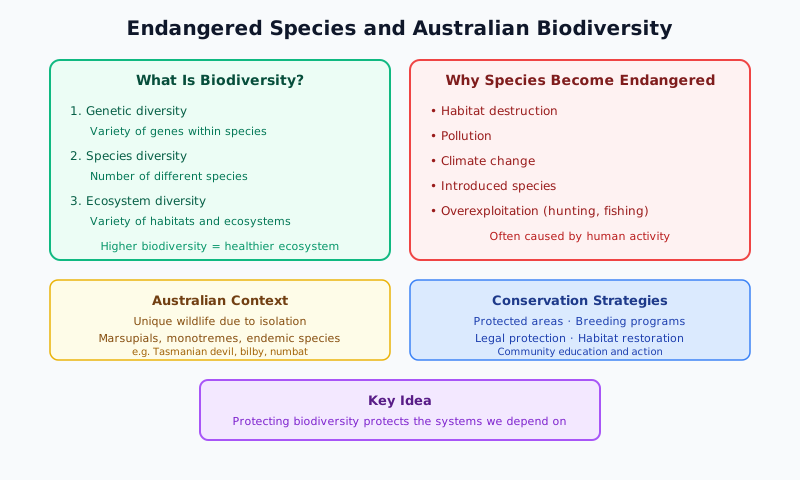
Diagram 2: Conservation Actions Pyramid
Pyramid showing levels of conservation from local action (planting natives) to landscape protection (national parks and Indigenous Protected Areas) with examples at each level.
Today's hook told you that Australia is home to about 10% of the world's unique species, yet it leads the world in mammal extinctions, over 30 species lost since Europeans arrived. Programs like those at Taronga Zoo are working to bring species back from the brink.
Now that you've worked through the lesson, give a complete answer: why are so many of Australia's unique animals at risk? Connect the ideas of isolation, introduced species and habitat loss, and describe one specific conservation approach that is helping.
Q1. Explain the difference between an extinct species and an endangered species.
1 mark for defining extinct, 1 mark for defining endangered, 1 mark for stating the distinction.Q2. Describe two threats facing Australian wildlife and explain how one conservation action could help.
1 mark for each threat (2), 1 mark for the conservation action, 1 mark for linking the action to a threat.Q3. A student claims that "introduced species are the only reason Australian animals are at risk." Evaluate this claim using evidence from the lesson.
1 mark for identifying introduced species as a threat, 1 mark for acknowledging other threats, 1 mark for a concrete example, 1 mark for explaining why multiple factors matter, 1 mark for clear reasoning.Model answers (click to reveal)
Model Answers
+Multiple Choice
1: B. Extinct means the species no longer exists anywhere on Earth.
2: B. Many Australian natives evolved without defenses against introduced predators such as foxes and cats.
3: B. New housing usually involves land clearing, which removes habitat and is the most likely cause of fewer frogs.
4: B. Protecting habitat preserves food, shelter and breeding sites, which is essential for long-term survival.
5: B. Biodiversity supports ecosystem stability and recovery; the other options are incorrect or too narrow.
Short Answer 1 (3 marks)
Sample answer: An extinct species is one that no longer exists anywhere on Earth (1 mark). An endangered species is still alive but at serious risk of becoming extinct (1 mark). The distinction is that extinct is permanent, while endangered means there is still time to act if threats are reduced (1 mark).
Short Answer 2 (4 marks)
Sample answer: Two threats are habitat loss from land clearing (1 mark) and predation by introduced species such as foxes and cats (1 mark). One conservation action is establishing predator-proof fenced reserves (1 mark), which reduces predation pressure and allows native populations to recover (1 mark).
Short Answer 3 (5 marks)
Sample answer: The claim is too simple. Introduced species such as foxes and cats are a major threat (1 mark), but they are not the only reason. Habitat loss from farming and urban expansion also removes food and shelter (1 mark), and climate change increases bushfires and droughts (1 mark). For example, koalas face habitat loss, disease and car strikes as well as dog attacks (1 mark). Therefore, effective conservation must address multiple threats, not just introduced species (1 mark).
Revisit Your Thinking
Look back at what you wrote in the Think First section. How has your understanding changed?
Model answers (click to reveal)
Model Answers
+Multiple Choice
1: B. Extinct means the species no longer exists anywhere on Earth.
2: B. Many Australian natives evolved without defenses against introduced predators such as foxes and cats.
3: B. New housing usually involves land clearing, which removes habitat and is the most likely cause of fewer frogs.
4: B. Protecting habitat preserves food, shelter and breeding sites, which is essential for long-term survival.
5: B. Biodiversity supports ecosystem stability and recovery; the other options are incorrect or too narrow.
Short Answer 1 (3 marks)
Sample answer: An extinct species is one that no longer exists anywhere on Earth (1 mark). An endangered species is still alive but at serious risk of becoming extinct (1 mark). The distinction is that extinct is permanent, while endangered means there is still time to act if threats are reduced (1 mark).
Short Answer 2 (4 marks)
Sample answer: Two threats are habitat loss from land clearing (1 mark) and predation by introduced species such as foxes and cats (1 mark). One conservation action is establishing predator-proof fenced reserves (1 mark), which reduces predation pressure and allows native populations to recover (1 mark).
Short Answer 3 (5 marks)
Sample answer: The claim is too simple. Introduced species such as foxes and cats are a major threat (1 mark), but they are not the only reason. Habitat loss from farming and urban expansion also removes food and shelter (1 mark), and climate change increases bushfires and droughts (1 mark). For example, koalas face habitat loss, disease and car strikes as well as dog attacks (1 mark). Therefore, effective conservation must address multiple threats, not just introduced species (1 mark).
● Big Idea
Australia's unique wildlife is under serious threat from introduced species, habitat loss and climate change.
● Key Process
Conservation combines habitat protection, predator control, breeding programs and community action.
● Why It Matters
Biodiversity keeps ecosystems stable. Losing species weakens food webs and reduces resilience.
● Living Systems Unit
From cells to tissues, organs, systems, ecosystems and now endangered species, every level of a living system depends on stable conditions and interacting parts. Protecting biodiversity keeps the whole system functioning.