Animal Transport - Circulatory System Basics
In 2023, Royal Prince Alfred Hospital cardiologists reported that the adult human heart beats approximately 100,000 times per day, pumping blood through nearly 100,000 km of vessels.
Printable Worksheets
Print or save as PDF, or build a custom worksheet from any module's questions.
Q1 · Q2: If you run a kilometre at school, your heart beats faster. What do you think your body is trying to deliver faster to your muscle cells?
● Know
- the circulatory system includes the heart, blood vessels and blood
- blood transports substances around the body
- the circulatory system is an organised transport system
● Understand
- the circulatory system solves the transport problem in animals
- the heart, blood vessels and blood have connected roles
- a strong explanation focuses on how components work together
● Can do
- identify the main components of the circulatory system
- explain the transport role of blood
- connect system components to whole-body function
Press two fingers against the inside of your wrist and you can feel blood being pushed past that spot around 70 times every minute, that pulse is your heart squeezing, the blood vessel you are pressing on, and red blood cells rushing by, all three working together as one system. The heart, blood vessels and blood are connected parts of a single transport system, not independent organs.
Animals have many internal cells that need useful substances delivered and wastes removed. The circulatory system helps solve this problem. At this level level, the key components are the heart, the blood vessels and the blood itself. Each part has a role, but none makes full sense on its own. The system works because the parts interact.
Heart
- pumps blood
- helps keep blood moving
Blood Vessels
- carry blood through the body
- connect different parts of the system
Blood
- moves substances around the body
- acts as the transport medium
Explore the blood vessels. What is the main difference between an artery and a vein?
Put these events in the correct order to show how the circulatory system transports substances.
- Blood vessels carry blood through the body
- Wastes are removed and nutrients are delivered
- Blood transports substances to and from cells
- The heart pumps blood
Use the heart interactive to trace blood flow. Which chamber pumps blood to the lungs?
- Heart
- Blood vessels
- Blood
- Carry blood to and from parts of the body
- Transport medium that moves substances around the body
- Pumps blood through the body
The main this level idea here is that blood transports substances around the body. The heart helps keep blood moving, and blood vessels provide the pathways. This is how the circulatory system supports cells across the body rather than only in one location.
A student writes: “The circulatory system is just the heart.” Rewrite this into a stronger scientific explanation.
Claim-Evidence-Reasoning Frame
Claim: State whether the student's explanation is scientifically correct or incomplete.
Evidence: Use evidence from the lesson about the three components of the circulatory system.
Reasoning: Explain why all three components are needed for whole-body transport.
A weak answer often says “the heart moves everything” and stops there. That is incomplete. The heart is essential, but the circulatory system also depends on blood vessels and blood. Strong answers show how all three components contribute to the whole system.
Misconceptions to Fix
✗ Wrong: Blood is blue inside the body, that's why veins look blue through the skin.
✓ Right: Blood is always red inside the body. Oxygenated blood (in arteries) is bright red. Deoxygenated blood (in veins) is dark red, not blue. Veins appear bluish through skin because of how different wavelengths of light penetrate tissue and reflect, it is an optical effect, not the blood's actual colour.
Write one paragraph explaining how the heart, blood vessels and blood work together as a transport system.
Wrong: The circulatory system is just the heart.
Right: The circulatory system includes the heart, blood vessels and blood. All three work together as a connected transport system.
Wrong: Blood is not part of the circulatory system because it is just a liquid.
Right: Blood is the transport medium that carries substances around the body. It is a key component of the circulatory system.
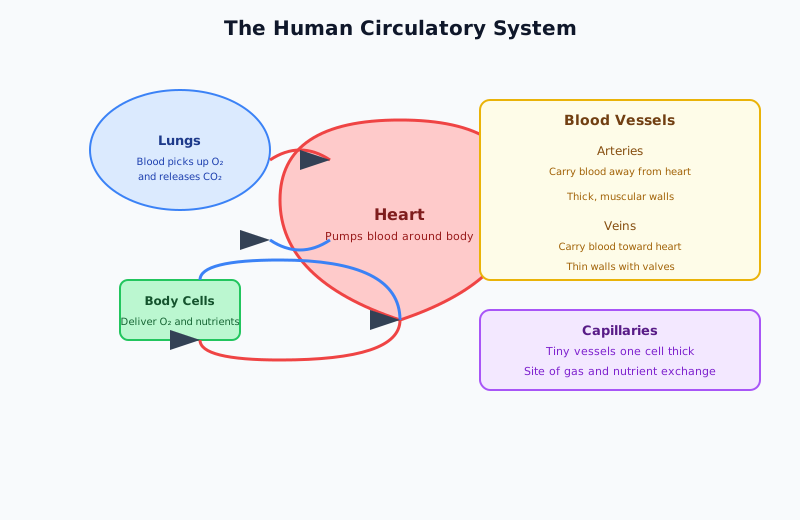
Diagram 2: Pathway of Blood Through the Body
Illustration showing blood moving from the heart to the lungs and body tissues, then returning to the heart.
Today's hook reminded you that your heart beats around 100,000 times every day, pushing blood through roughly 100,000 km of vessels, enough to circle Earth twice. That amazing pump is the circulatory system this lesson has been unpacking.
Now that you've worked through the lesson, can you answer this fully: when you run a kilometre and your heart beats faster, what exactly is your body trying to deliver faster to your muscle cells? Name the components of the circulatory system involved.
Q1. Name the main components of the circulatory system and state the role of each.
1 mark for heart role; 1 mark for blood vessel role; 1 mark for blood role.Q2. Explain how the heart, blood vessels and blood work together to transport substances around the body.
1 mark for heart pumping; 1 mark for vessels carrying blood; 1 mark for blood transporting substances; 1 mark for linking them as a connected system.Q3. Why is it scientifically stronger to describe the circulatory system as a connected transport system rather than just calling it “the heart”?
1 mark for stating that "the heart alone" is incomplete; 1 mark for explaining the role of blood vessels; 1 mark for explaining the role of blood; 1 mark for linking to whole-body function.Model answers (click to reveal)
Model Answers
+Multiple Choice
1: D. The main this level components are the heart, blood vessels and blood.
2: A. Blood transports substances around the body.
3: C. Blood vessels carry blood through the body.
4: B. The system depends on multiple connected components.
5: D. This is the strongest whole-system explanation.
Short Answer 1 (3 marks)
The heart pumps blood. Blood vessels carry the blood through the body. Blood transports substances around the body as the transport medium.
1 mark for heart pumps blood. 1 mark for vessels carry blood. 1 mark for blood transports substances.
Short Answer 2 (4 marks)
The heart pumps blood, blood vessels provide the pathways for movement, and blood carries substances around the body. Together these components form a transport system that supports cells across the body.
1 mark for heart pumping. 1 mark for vessels carrying. 1 mark for blood transporting. 1 mark for connected system.
Short Answer 3 (4 marks)
It is stronger because it explains how the parts work together. Calling it only “the heart” ignores the roles of blood vessels and blood, which are also essential to transport around the body.
1 mark for heart alone is incomplete. 1 mark for vessel role. 1 mark for blood role. 1 mark for whole-body function.
Revisit Your Thinking
Return to the opening prompt. Can you now explain animal transport using the whole circulatory system rather than one part only?
Model answers (click to reveal)
Model Answers
+Multiple Choice
1: D. The main this level components are the heart, blood vessels and blood.
2: A. Blood transports substances around the body.
3: C. Blood vessels carry blood through the body.
4: B. The system depends on multiple connected components.
5: D. This is the strongest whole-system explanation.
Short Answer 1 (3 marks)
The heart pumps blood. Blood vessels carry the blood through the body. Blood transports substances around the body as the transport medium.
1 mark for heart pumps blood. 1 mark for vessels carry blood. 1 mark for blood transports substances.
Short Answer 2 (4 marks)
The heart pumps blood, blood vessels provide the pathways for movement, and blood carries substances around the body. Together these components form a transport system that supports cells across the body.
1 mark for heart pumping. 1 mark for vessels carrying. 1 mark for blood transporting. 1 mark for connected system.
Short Answer 3 (4 marks)
It is stronger because it explains how the parts work together. Calling it only “the heart” ignores the roles of blood vessels and blood, which are also essential to transport around the body.
1 mark for heart alone is incomplete. 1 mark for vessel role. 1 mark for blood role. 1 mark for whole-body function.
● Main Components
The circulatory system includes the heart, blood vessels and blood.
● Transport Role
Blood transports substances around the body.
● Whole-System Thinking
Strong explanations show how system parts work together rather than focusing on one part alone.
● Bridge Forward
Next lesson links animal gas exchange to circulatory transport and system interaction.