Plant Transport - Roots, Stems and Leaves
In 2021, University of Queensland researchers measured a 60-metre eucalyptus tree lifting 200 litres of water to its canopy each day, without a single pump or moving part.
Printable Worksheets
Print or save as PDF, or build a custom worksheet from any module's questions.
Q1 · Q2: Why do you think wilting leaves recover after watering, even though the plant has no heart to pump water?
● Know
- roots take in water and dissolved substances
- stems help move substances through the plant
- leaves are involved in both use and loss of water
● Understand
- plant transport can be described as uptake, movement and loss
- roots, stems and leaves have connected transport roles
- plants need transport even though they do not have blood
● Can do
- explain the basic path of water through a plant
- compare the transport role of roots, stems and leaves
- use clear this level transport language
If you pull a wilting plant out of dry soil and water it, you can watch the stems straighten and the leaves firm up within minutes, evidence that water is moving from roots upward through connected tissues. It is a connected process involving uptake, movement and loss across different structures.
Roots, stems and leaves do different jobs, but they support one another. Roots take up water and dissolved substances from the environment. Stems help connect the plant and support movement through it. Leaves use transported materials and are also places where water can leave the plant. This is why plant transport should be explained as a linked system rather than as three unrelated parts.
Roots
- take in water from soil
- take in dissolved mineral substances
Stems
- connect roots and leaves
- help transport substances through the plant
Leaves
- use transported water
- are linked to water loss to the environment
This lesson does not require advanced plant-transport terminology. The important idea is the sequence. Water and dissolved substances are taken up by roots, moved through the plant by connected structures including the stem, and used or lost from leaves. Even at this simple level, the process shows that plants have organised transport.
Put the stages of basic plant transport in the correct order.
- Transport: the stem helps move substances through the plant
- Loss: leaves are also linked to water loss from the plant
- Use: leaves use transported materials for function
- Uptake: roots absorb water and dissolved substances
Write a simple explanation tracing water from the soil to the leaves. Use the terms roots, stem and leaves.
- Roots
- Stem
- Leaves
- Connect roots and leaves; help move substances
- Use transported materials; linked to water loss
- Absorb water and dissolved substances from the environment
A common weak idea is that plant transport does not count because plants do not pump blood. That confuses one kind of transport with the wider concept. Transport means moving substances through the organism. Plants absolutely do this, and their cells depend on it.
A student writes: “Leaves do plant transport because they are at the top.” Rewrite this so it explains the connected roles more accurately.
Claim-Evidence-Reasoning Frame
Claim: State whether the student's explanation is scientifically correct or incomplete.
Evidence: Use evidence from the lesson about the roles of roots, stems and leaves.
Reasoning: Explain how the evidence shows the connected transport roles.
Wrong: Plant transport is not real because plants do not have blood.
Right: Transport means moving substances through an organism. Plants move water and dissolved substances through roots, stems and leaves without needing blood.
Wrong: The stem is just a stick that holds the plant up; it does not help transport.
Right: The stem connects roots and leaves and helps move substances through the plant, so it is an active part of transport, not just a support structure.
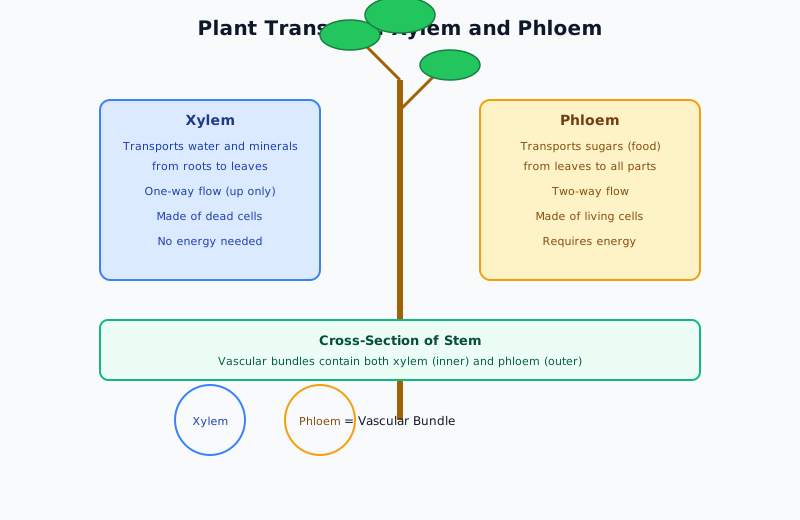
Diagram 2: Water Movement Through a Stem
Illustration showing water travelling upward through stem tissues from roots to leaves, with arrows indicating direction.
Today's hook told you that a tall eucalyptus tree can lift over 200 litres of water from its roots to its canopy every single day, with no pump at all. That remarkable fact is what this whole lesson has been explaining.
Now that you've worked through the lesson, can you explain why wilting leaves recover after watering even though the plant has no heart? Name the clever physics the plant uses, and trace the path water takes from roots to leaves.
Q1. Explain the transport role of roots, stems and leaves in one connected answer.
1 mark for root role; 1 mark for stem role; 1 mark for leaf role.Q2. Describe the basic path of water through a plant from the environment to the leaves.
1 mark for uptake by roots; 1 mark for transport through stem; 1 mark for use/loss at leaves; 1 mark for correct sequence.Q3. Why is it scientifically stronger to describe plant transport as uptake, movement and loss rather than just naming plant parts?
1 mark for stating that naming parts alone is weak; 1 mark for explaining uptake, movement and loss; 1 mark for linking structure to function; 1 mark for using an example.Model answers (click to reveal)
Model Answers
+Multiple Choice
1: A. Roots take in water and dissolved substances.
2: C. The stem helps connect the plant and move substances through it.
3: B. This is the correct basic sequence at this level depth.
4: D. Plants transport substances even though they do not have blood.
5: C. This captures the connected transport roles across plant structures.
Short Answer 1 (3 marks)
Roots take in water and dissolved substances from the environment. Stems help move those substances through the plant. Leaves use transported materials and are also linked to water loss, so all three structures contribute to plant transport.
1 mark for root uptake. 1 mark for stem movement. 1 mark for leaf use/loss.
Short Answer 2 (4 marks)
Water is taken in from the environment by the roots. It is then moved upward through the plant with the help of the stem. It reaches the leaves, where it can be used and where some water can be lost to the environment.
1 mark for root uptake. 1 mark for stem transport. 1 mark for leaf use/loss. 1 mark for correct sequence.
Short Answer 3 (4 marks)
It is stronger because it explains the process and the roles of structures in that process. Naming parts alone does not show what each part does or how the structures work together to transport substances through the plant.
1 mark for naming parts is weak. 1 mark for uptake/movement/loss. 1 mark for structure-function link. 1 mark for example.
Revisit Your Thinking
Return to the opening prompt. Can you now explain the basic path of water through a plant with clearer transport language?
Model answers (click to reveal)
Model Answers
+Multiple Choice
1: A. Roots take in water and dissolved substances.
2: C. The stem helps connect the plant and move substances through it.
3: B. This is the correct basic sequence at this level depth.
4: D. Plants transport substances even though they do not have blood.
5: C. This captures the connected transport roles across plant structures.
Short Answer 1 (3 marks)
Roots take in water and dissolved substances from the environment. Stems help move those substances through the plant. Leaves use transported materials and are also linked to water loss, so all three structures contribute to plant transport.
1 mark for root uptake. 1 mark for stem movement. 1 mark for leaf use/loss.
Short Answer 2 (4 marks)
Water is taken in from the environment by the roots. It is then moved upward through the plant with the help of the stem. It reaches the leaves, where it can be used and where some water can be lost to the environment.
1 mark for root uptake. 1 mark for stem transport. 1 mark for leaf use/loss. 1 mark for correct sequence.
Short Answer 3 (4 marks)
It is stronger because it explains the process and the roles of structures in that process. Naming parts alone does not show what each part does or how the structures work together to transport substances through the plant.
1 mark for naming parts is weak. 1 mark for uptake/movement/loss. 1 mark for structure-function link. 1 mark for example.
● Roots
Roots take in water and dissolved substances from the environment.
● Stem
The stem helps connect the plant and move substances through it.
● Leaves
Leaves use transported materials and are linked to water loss.
● Bridge Forward
Next lesson focuses more directly on gas exchange in plants.